THE DIFFERENCES THAT MATTER
Sennheiser HD 660S2 vs beyerdynamic DT 1990 PRO MKII: desk setup
Compare exact open-back wired headphones on supplied cables, source matching, service items and shared-room limitations.
Researched from manufacturer sources. These products have not been hands-on tested for this article.
START HERE
Does your desk suit Sennheiser’s two supplied cable formats or beyerdynamic’s single-entry studio cable and pad system?
Sennheiser HD 660S2 and beyerdynamic DT 1990 PRO MKII are wired open-back headphones. Both belong in a discussion about private-room listening or studio work, not active noise cancellation for a commute. Their published impedance, cable packages and handling differ. This comparison uses the current 30-ohm MKII, not the original 250-ohm DT 1990 PRO, and makes no claim that materials or driver descriptions establish a sound-quality winner.
Sennheiser HD 660S2
A good fit if: A shortlist option for private listening with a source that has an appropriate headphone output.
The tradeoff: An open back does not isolate a shared workspace, and a plug adapter does not establish sufficient output from every source.
beyerdynamic DT 1990 PRO MKII (30 ohms)
A good fit if: A shortlist option when detachable single-entry cables, two pad sets and a studio storage case suit the desk.
The tradeoff: This is the 30-ohm MKII, not the original 250-ohm DT 1990 PRO; impedance alone cannot rank sound or source matching.
As an Amazon Associate I earn from qualifying purchases. How shopping links work.
HD 660S2
View this model on Amazon : Sennheiser HD 660S2 (opens in a new tab)Check the seller, exact variant, price and included accessories.DT 1990 PRO MKII
View this model on Amazon : beyerdynamic DT 1990 PRO MKII (30 ohms) (opens in a new tab)Check the seller, exact variant, price and included accessories.See the product photos and comparison illustration
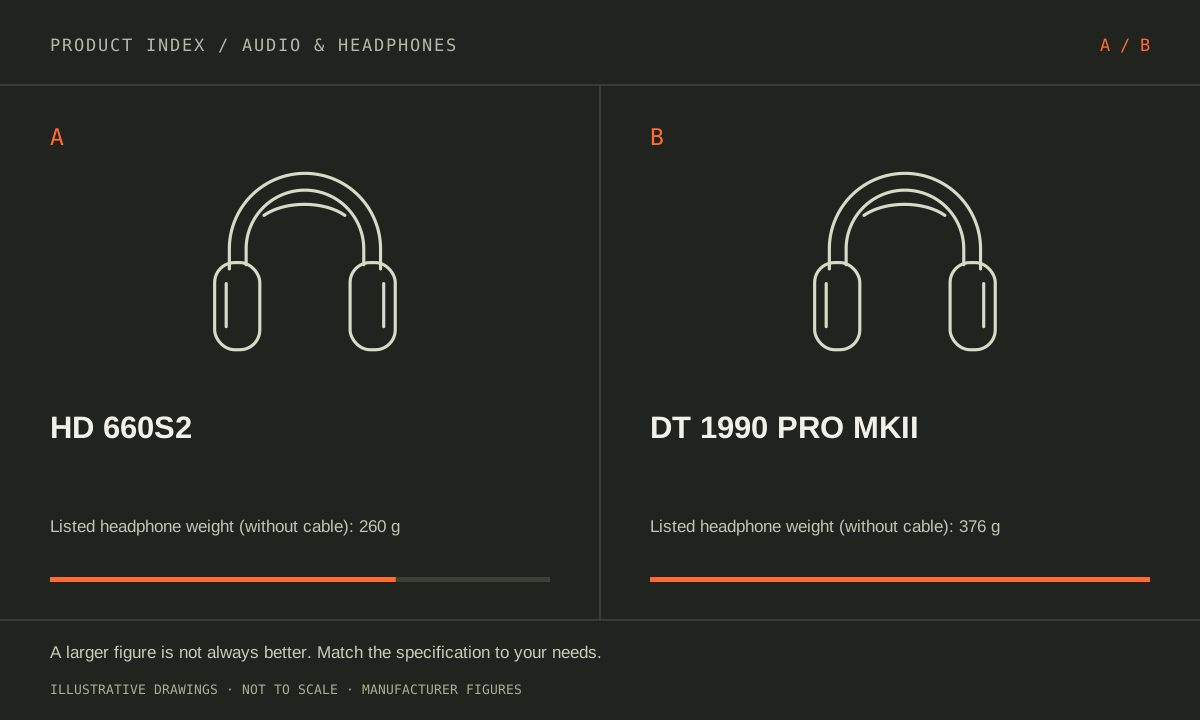
The facts, side by side.
Manufacturer specifications for the named models. On small screens, scroll the table sideways. A blank research field means the fact was not included here, not that the manufacturer does not publish it. Conditions and differently scoped specifications are kept separate.
| What matters | HD 660S2 [1] | DT 1990 PRO MKII [2] |
|---|---|---|
| Style | Wired open-back, circumaural dynamic headphones | Wired open-back, circumaural studio headphones |
| Nominal impedance | 300 ohms | 30 ohms |
| Listed headphone weight | 260 g without cable (official quick guide) | 376 g without cable |
| Source connection | 6.35 mm unbalanced and 4.4 mm balanced cables | 3.5 mm stereo; 6.35 mm adapter |
| Included cables | 1.8 m cables; 6.35-to-3.5 mm adapter | 3 m straight and 5 m coiled (stretched); detachable mini-XLR |
| Noise cancellation | No active noise cancellation | No active noise cancellation |
| Accessories | Not included in this comparison | Hard case; producing and mixing/mastering ear-pad sets |
Listed maximums are manufacturer claims under their stated conditions, not results from our own testing. Regional versions and bundles can differ. No live prices or stock claims are shown.
A source needs the right output, not merely a matching plug
HD 660S2 has a nominal impedance of 300 ohms and includes 6.35 mm unbalanced and 4.4 mm balanced cables. DT 1990 PRO MKII is 30 ohms and includes a 3.5 mm connection with a 6.35 mm adapter. Check the headphone output of the actual interface, amplifier or portable player, including its supported connection type. A balanced headphone plug should go only to the appropriate supported headphone output, not an arbitrary socket of the same diameter.
Impedance alone cannot establish loudness, sound quality or whether a source is adequate. Published sensitivities can use different reference levels and test frequencies, so subtracting their bare numbers can mislead. Start with your source’s documented output capability and intended listening level. If additional equipment is needed, evaluate it as part of the purchase rather than assuming every laptop socket, adapter or dongle is interchangeable. Avoid selecting an amplifier from a nominal-impedance number without checking the full source-and-headphone arrangement.
Manufacturer references: HD 660S2 · DT 1990 PRO MKII
Cable and storage details affect a real working desk
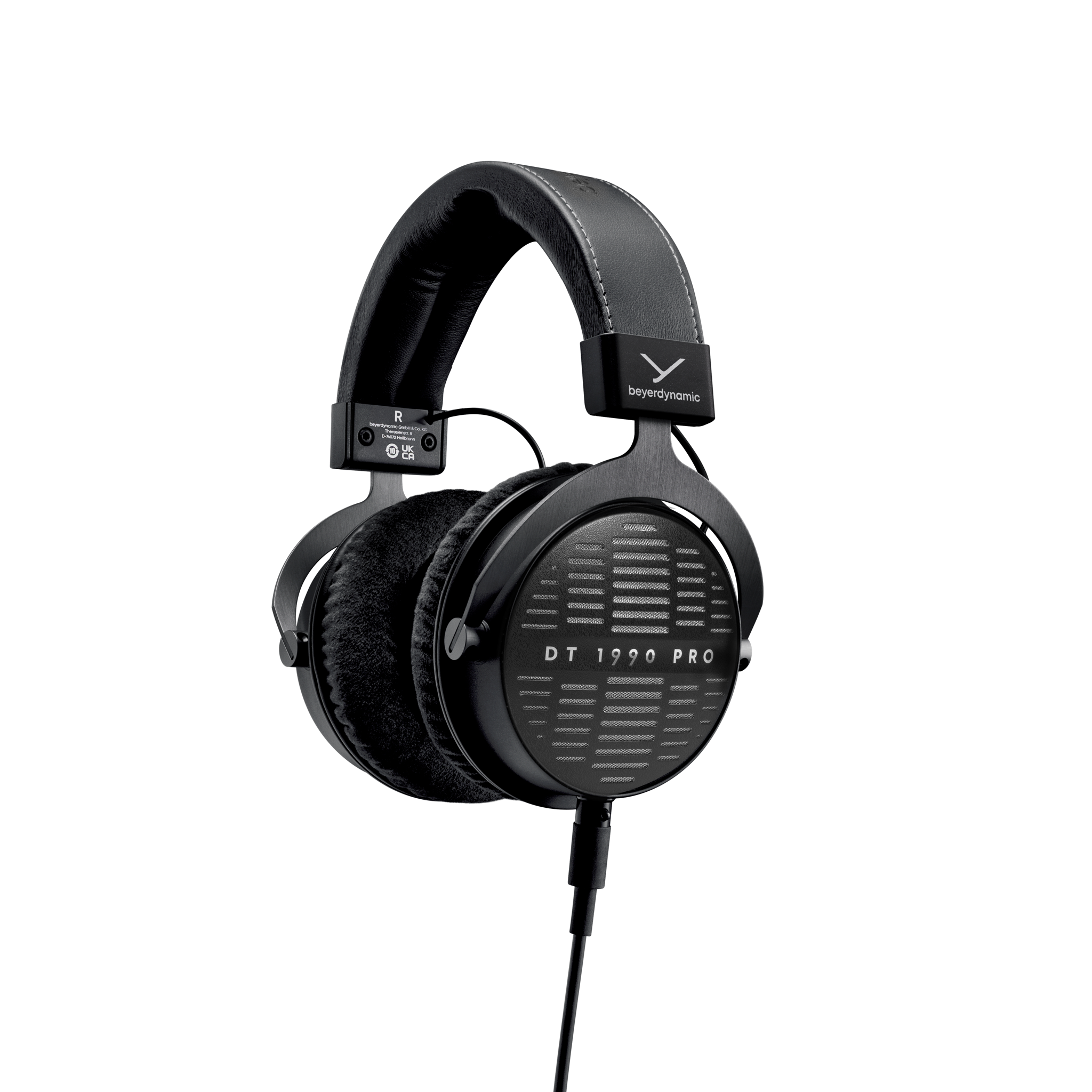
Sennheiser supplies 1.8 m cables for the two connection formats and a 3.5 mm adapter. The beyerdynamic package includes a three-metre straight cable and a coiled cable listed at five metres stretched, with detachable mini-XLR connection at the headphone. Think about where the interface sits and how often you move between equipment. A long cable can reach a rack conveniently but may need management at a compact laptop desk.
The MKII also includes a hard case and two specified ear-pad sets for producing and mixing/mastering. Their presence is a documented package distinction, not proof of a preferred tonal balance for every listener. Check the manufacturer’s replacement cable, pad and headband availability and instructions for the exact model before planning long ownership. Similar brand or series names do not guarantee that a replacement part fits. Keep the selected pads consistent if repeatable monitoring is part of the job.
Manufacturer references: HD 660S2 · DT 1990 PRO MKII
Open backs and fit define where these headphones belong
Neither model offers active noise cancellation. Open-back headphones allow sound exchange with the room, making them an awkward answer to privacy or isolation requirements in a shared office. Consider microphone placement if recording nearby, and whether other people need quiet. A technically impressive source chain cannot turn an open design into closed isolation. If the normal listening location is a train or a busy room, reassess the headphone type before comparing these particular packages.
Sennheiser’s guide lists 260 g without cable; beyerdynamic lists 376 g without cable. The difference is useful for a handling shortlist but cannot establish comfort, clamp or ear clearance for your head. Try the actual pads and adjustment range for a realistic session where possible. Favor HD 660S2 when its cable formats, source match and fit suit private listening. Favor DT 1990 PRO MKII when its studio cable, pad and case arrangement fits the workflow. Listening preference still requires suitable audition evidence.
Manufacturer references: HD 660S2 · DT 1990 PRO MKII
A CLOSER LOOK AT OWNERSHIP
Beyond the specification sheet.
Additional model-specific document research checked October 20, 2026. The original comparison’s specification check date remains shown above.
Check the complete setup before ordering
HD 660S2 is a wired open-back choice. Check the headphone output you will use and the appropriate balanced or unbalanced connection in the quick guide. Do not assume a plug adapter proves adequate operation. Decide whether the listening location can tolerate an open-back design before comparing tonal preferences.
Verify DT 1990 PRO MKII rather than the original DT 1990 PRO. This is an open-back studio headphone, so test it in the actual editing or listening room. Evaluate the intended headphone output and supplied connection rather than using the impedance number alone as a complete source-compatibility verdict.
Sources: HD 660S2 — manufacturer model information; no independent performance test (opens in a new tab) · DT 1990 PRO MKII — manufacturer model information; no independent performance test (opens in a new tab)
Price the equipment you will actually use
Price HD 660S2 with only the source equipment you actually need. Try an existing suitable headphone output before automatically buying a DAC and amplifier stack. The guide documents cable and pad replacement, so request current genuine-part prices and include them in a long-ownership comparison.
For DT 1990 PRO MKII, confirm the supplied pads, cables, and case in the seller’s package and price replacement parts by generation. If an amplifier upgrade is proposed, identify the existing output’s actual limitation first. Allocate money to a useful source solution rather than adding equipment because the headphone is marketed for studios.
Sources: HD 660S2 — manufacturer model information; no independent performance test (opens in a new tab) · DT 1990 PRO MKII — manufacturer model information; no independent performance test (opens in a new tab)
Plan care, parts, and the service route
Use the HD 660S2 quick guide for replacing pads and cables and ask Sennheiser about regional warranty eligibility and driver service. A documented replaceable component is useful, but its future price and stock are not guaranteed here. Inspect cable seating and pad condition before deciding that an aging pair needs replacement.
Ask beyerdynamic’s regional service team which MKII parts are user-replaceable and which require service. Confirm purchase eligibility, turnaround, and any labor or freight charges for a used or imported pair. A product-page warranty headline is not a substitute for the applicable policy or an individual repair assessment.
Sources: HD 660S2 — manufacturer model information; no independent performance test (opens in a new tab) · DT 1990 PRO MKII — manufacturer model information; no independent performance test (opens in a new tab)
What rules each option out—and when to keep what you own
Rule out both if you need isolation in a noisy or shared space; these are open-back wired designs. Then check the actual headphone output and connection rather than ranking by impedance alone. Confirm MKII on the beyerdynamic listing. A comfortable studio trial is more informative than treating professional positioning as a guarantee of preference.
Keep a suitable current wired headphone when new pads or a cable solve the issue. Before adding a DAC or amplifier, identify the source’s actual limitation and try a suitable output. For editing, compare familiar reference material and long-session comfort; for leisure, do not mistake a studio use case for a requirement to buy a particular tuning.
Sources: HD 660S2 — manufacturer model information; no independent performance test (opens in a new tab) · DT 1990 PRO MKII — manufacturer model information; no independent performance test (opens in a new tab)
THE REST OF THE BUYING DECISION
Think beyond the upgrade.
Audio equipment earns its place by being comfortable, easy to connect, and useful in the room or routine you actually have. Start with your listening source and the problem you want to solve. A codec badge, driver count, or spatial-audio logo cannot establish the best sound for every listener. The guidance here combines official setup documentation with an explicit checklist for your own evaluation.
The audio & headphones field guide covers the broader ownership questions, with source-specific examples. It complements this exact-model comparison; its examples do not establish features or policies for every model here.
MAKE IT YOUR DECISION
Your before-you-buy checklist.
Use this as a final check, alongside the model-specific evidence above.
Check off the questions you have resolved. Nothing is sent to a server.
Before you place the order.
- Match the full model name and generation. A similarly named bundle may have different accessories.
- Confirm the total price, seller, warranty eligibility, delivery estimate, and return terms at checkout.
- Account for any accessories or compatible equipment your setup needs. An upgrade only has value if you will use it.
Your product questions, answered.
Is this the original DT 1990 PRO?
No. This is the DT 1990 PRO MKII rated at 30 ohms. Original 250-ohm model facts must not be substituted.
Does the Sennheiser need a balanced amplifier?
No balanced requirement is implied. It also includes an unbalanced cable; choose a suitable supported output for the exact source.
Does lower impedance automatically mean better source compatibility?
No. Evaluate the complete output and headphone combination, including useful volume and connection type. A single impedance value is not a full performance or compatibility assessment.
Sources: HD 660S2 — manufacturer model information; no independent performance test (opens in a new tab) · DT 1990 PRO MKII — manufacturer model information; no independent performance test (opens in a new tab)
Do I need a balanced amplifier?
Not automatically. Use an appropriate supported connection from a suitable existing output first. Buy new source equipment only to solve a demonstrated limitation, not merely to use another cable.
Sources: HD 660S2 — manufacturer model information; no independent performance test (opens in a new tab) · DT 1990 PRO MKII — manufacturer model information; no independent performance test (opens in a new tab)
Which wear items should I price?
Ask for exact-generation pads and cables plus any labor involved. HD 660S2’s guide documents replacement steps; confirm the DT 1990 PRO MKII procedure and current regional parts.
Sources: HD 660S2 — manufacturer model information; no independent performance test (opens in a new tab) · DT 1990 PRO MKII — manufacturer model information; no independent performance test (opens in a new tab)
What makes either unsuitable for commuting?
The open-back, wired approach does not meet a typical isolation and wireless-mobility requirement. If that is the job, compare a suitable closed or noise-cancelling category instead.
Sources: HD 660S2 — manufacturer model information; no independent performance test (opens in a new tab) · DT 1990 PRO MKII — manufacturer model information; no independent performance test (opens in a new tab)
Sources & limitations.
Original comparison research: October 18, 2026. Individual product-source checks and ownership additions carry their own dates. These links identify the manufacturer evidence used for the specifications. Recommendations and practical implications are our editorial judgments. We have not measured performance, reliability, comfort, or long-term ownership for this comparison.
- Sennheiser HD 660S2 — manufacturer specifications (opens in a new tab)
Checked October 18, 2026. - beyerdynamic DT 1990 PRO MKII (30 ohms) — manufacturer specifications (opens in a new tab)
DT 1990 PRO MKII official data sheet (opens in a new tab)
Checked October 18, 2026.
Confirm current specifications for your region and exact bundle. Read our research and correction approach.