THE DIFFERENCES THAT MATTER
Canon EOS R8 vs Sony a6700: full frame or stabilized APS-C video?
Compare similarly weighted bodies through the complete lens system, stabilization and recording-mode plan.
Researched from manufacturer sources. These products have not been hands-on tested for this article.
START HERE
Does a full-frame RF lens plan matter more than the a6700’s supported stabilization and high-frame-rate workflow?
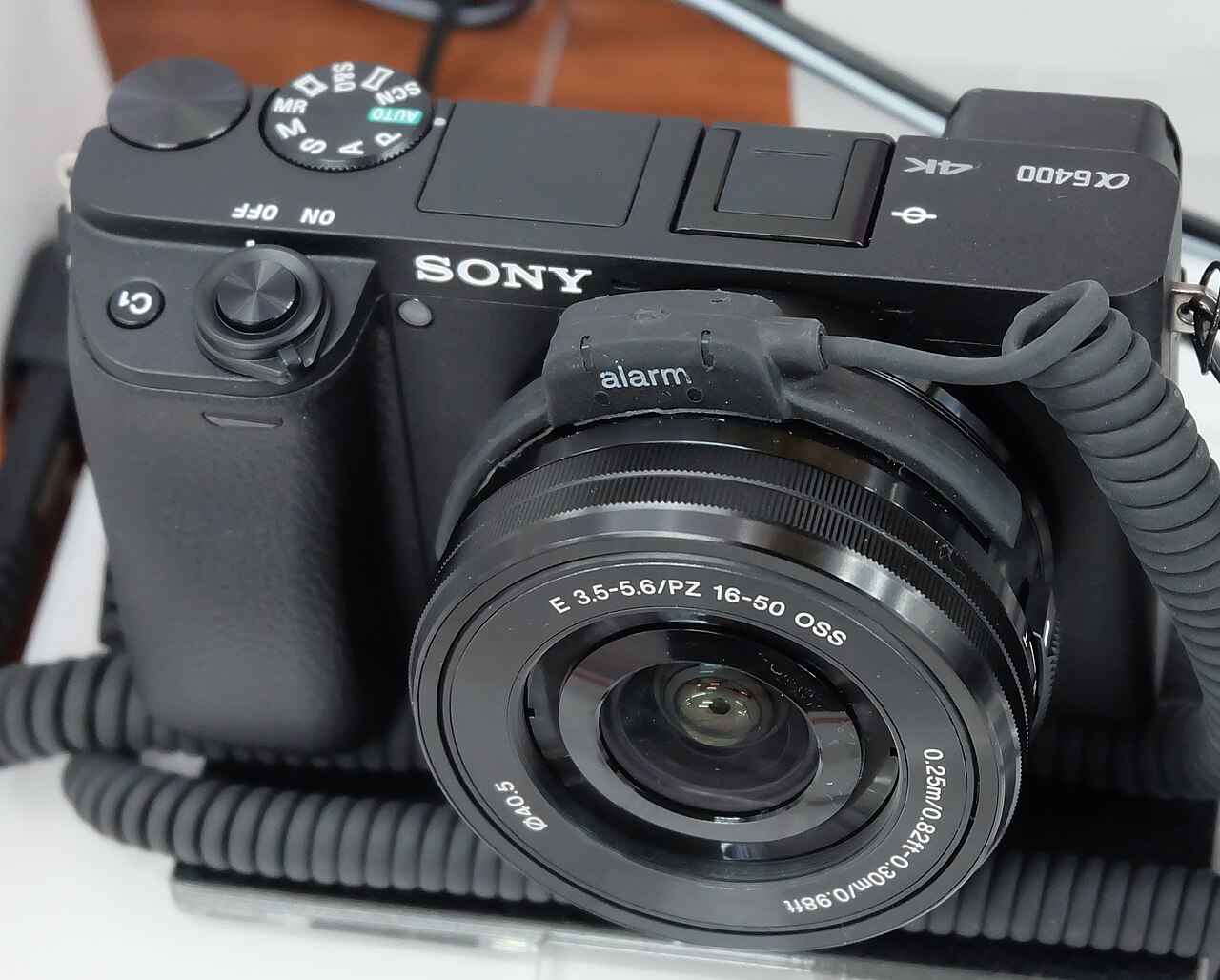
Canon EOS R8 and Sony a6700 look close in body weight: about 461 g and 493 g with battery and card. They nevertheless anchor different systems. R8 uses a full-frame sensor with Canon RF lenses; a6700 uses APS-C with Sony E lenses and adds sensor-shift stabilization. Decide from the photographs, footage and lenses needed, while leaving measured autofocus and image-quality rankings to appropriate comparative evidence.
Canon EOS R8 (body only)
A good fit if: A shortlist option for a lighter full-frame kit and a screen that can face the photographer.
The tradeoff: One memory-card slot and no sensor-shift IBIS may matter more than its lower body weight.
Sony Alpha a6700 (ILCE-6700; body only)
A good fit if: A shortlist option for an E-mount lens plan or a workflow needing its cropped high-frame-rate 4K mode.
The tradeoff: 4K 120p is a restricted mode rather than the same field of view as ordinary 4K; sensor-shift ratings are conditional.
As an Amazon Associate I earn from qualifying purchases. How shopping links work.
Canon EOS R8
View this model on Amazon : Canon EOS R8 (body only) (opens in a new tab)Check the seller, exact variant, price and included accessories.Sony a6700
View this model on Amazon : Sony Alpha a6700 (ILCE-6700; body only) (opens in a new tab)Check the seller, exact variant, price and included accessories.See the product photos and comparison illustration
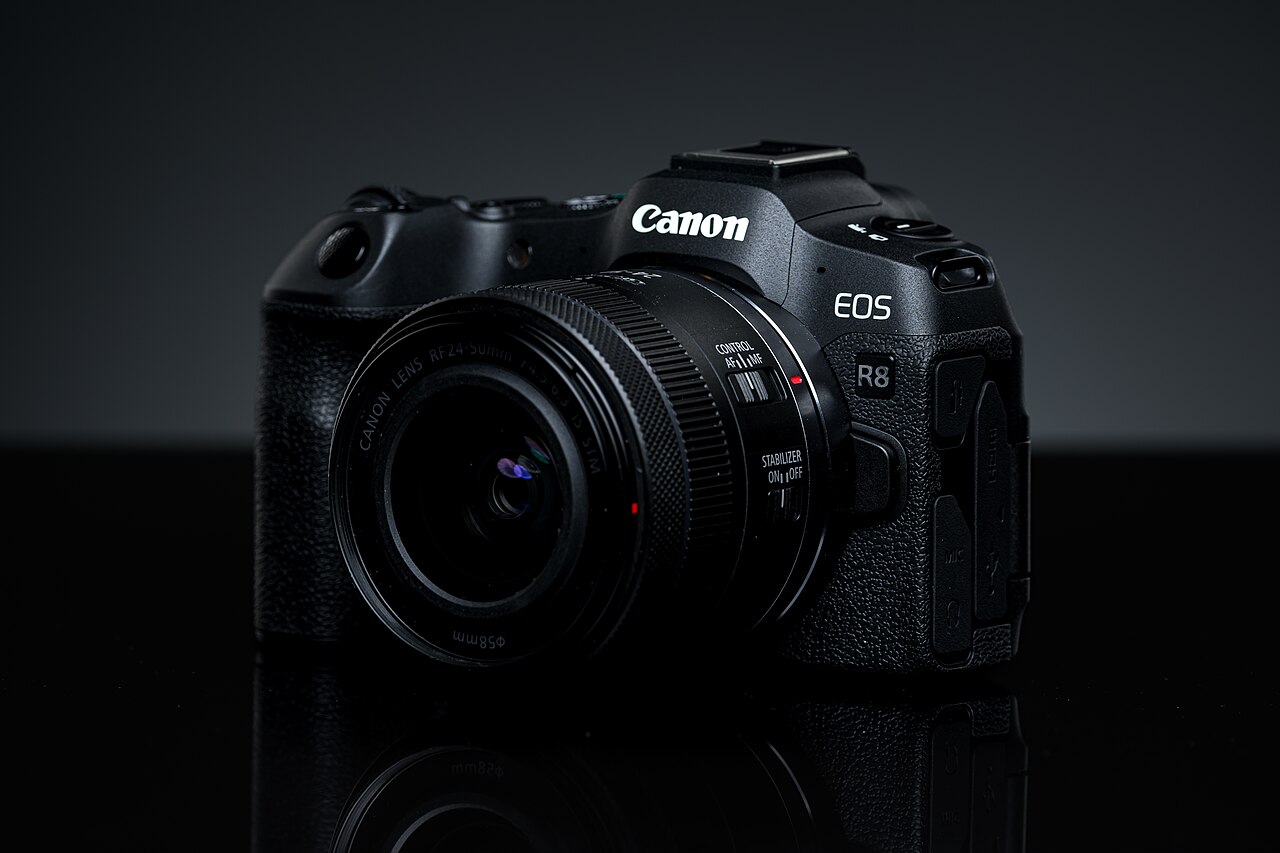
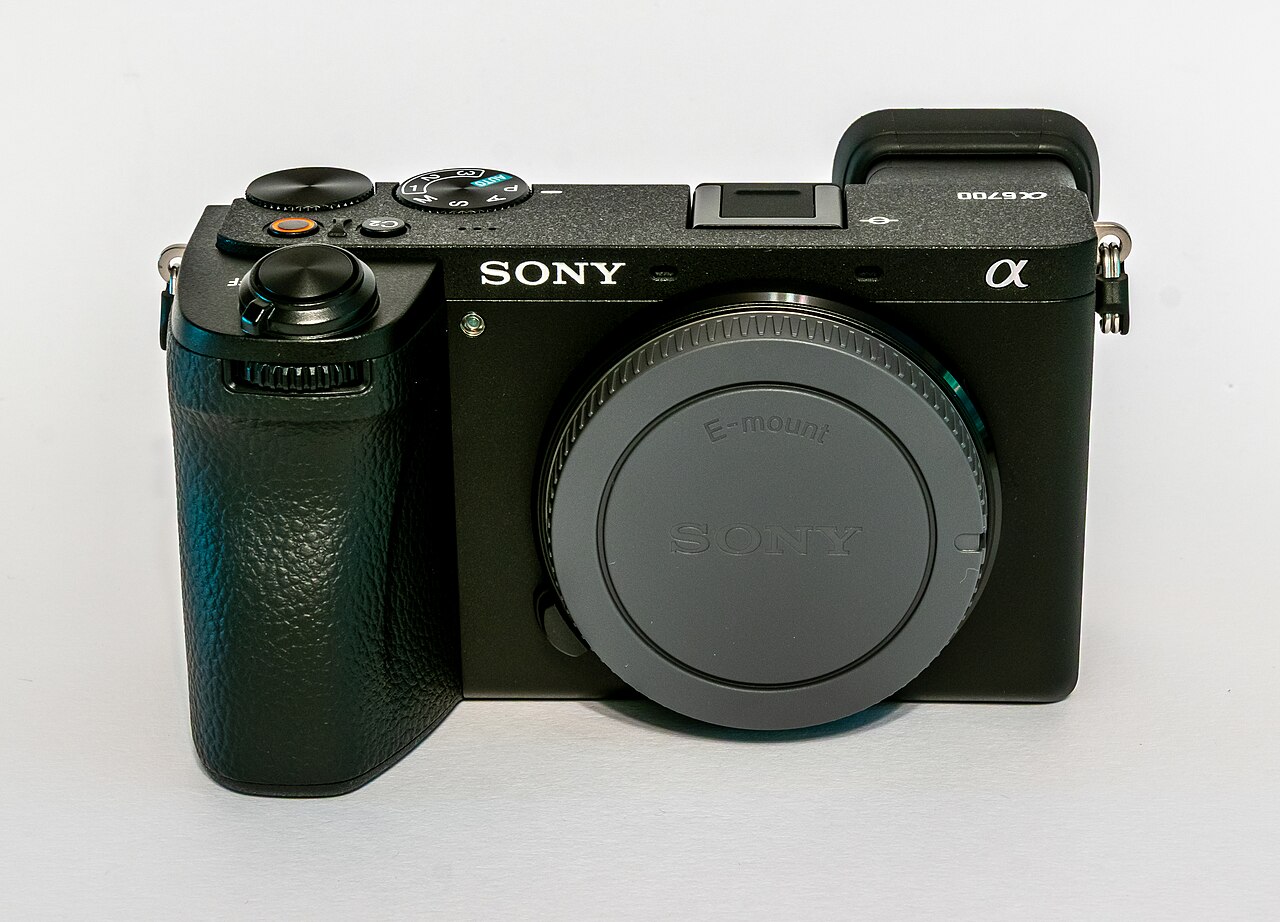
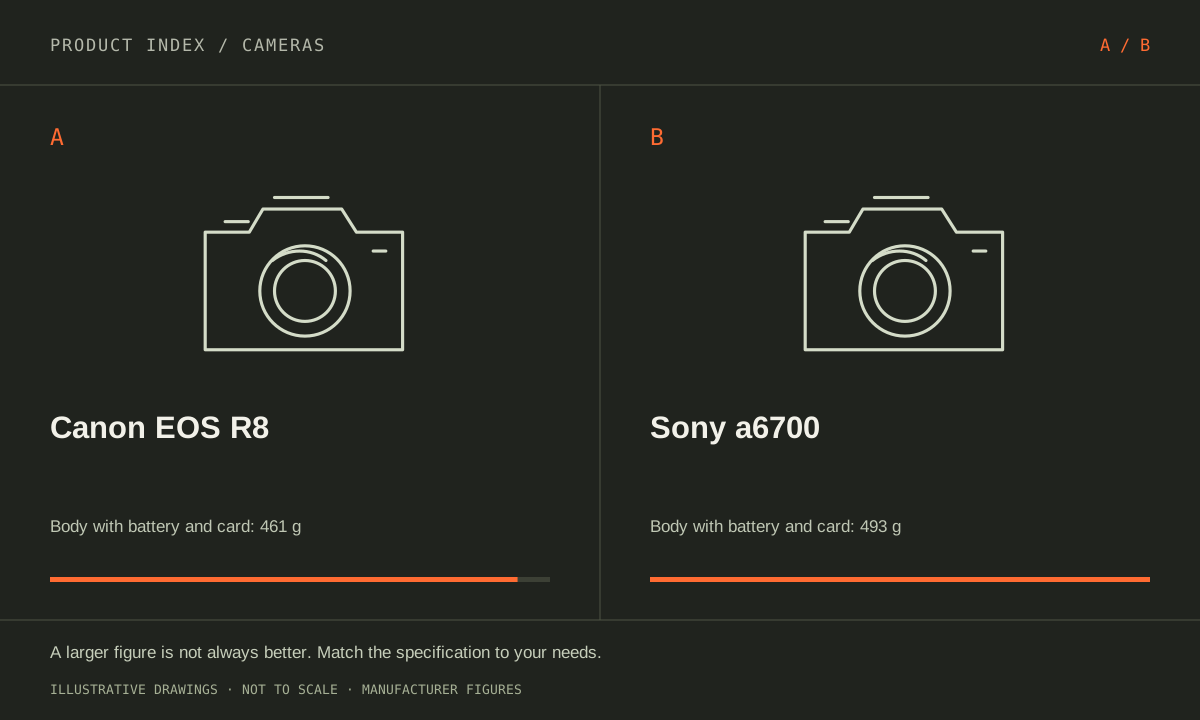
The facts, side by side.
Manufacturer specifications for the named models. On small screens, scroll the table sideways. A blank research field means the fact was not included here, not that the manufacturer does not publish it. Conditions and differently scoped specifications are kept separate.
| What matters | Canon EOS R8 [1] | Sony a6700 [2] |
|---|---|---|
| Effective resolution | Approximately 24.2 megapixels | Approximately 26.0 MP stills |
| Sensor format | Full frame | APS-C |
| Lens mount | Canon RF | Sony E-mount |
| Stabilization | No sensor-shift IBIS; lens IS and Movie Digital IS options | 5-axis sensor-shift; 5.0-stop CIPA claim with specified lens |
| Memory card slots | 1 × SD; UHS-II supported | Not included in this comparison |
| Screen | 3-inch vari-angle touchscreen | 3.0-type vari-angle touchscreen |
| Weight with battery/card | Approximately 461 g | Approximately 493 g |
| Video option | Not included in this comparison | 4K up to 120p; crop and mode restrictions apply |
Listed maximums are manufacturer claims under their stated conditions, not results from our own testing. Regional versions and bundles can differ. No live prices or stock claims are shown.
A similar body weight is not a similar complete kit
Choose lenses that give the desired field of view on each sensor format. The same focal-length number does not frame identically on full frame and APS-C. Compare actual candidate lenses for the required wide room, portrait distance or distant subject, including aperture, stabilization, close focusing and filter needs. Add those weights to the body rather than assuming the thirty-two-gram body difference describes the two systems a traveller will carry.
Existing lenses can change this decision substantially. Confirm exact mount compatibility, coverage and adapter requirements instead of treating brand ownership as proof that every lens transfers unchanged. An RF-S lens and a full-frame RF lens also create different coverage questions on a full-frame body. Budget the complete useful lens set, memory cards, power and support. A body-only price or weight cannot describe the eventual system if the required optics are missing from the comparison.
Manufacturer references: Canon EOS R8 · Sony a6700
Stabilization belongs to a specific mode and lens combination
R8 has no sensor-shift IBIS. a6700 includes it, with Sony’s conditional five-stop still-photo claim using its specified FE 50 mm F1.2 GM lens. That is a documented feature distinction, but not a promise of a particular result with every lens or shutter speed. Optical lens stabilization and electronic video stabilization have their own behavior. Identify whether the actual problem is camera shake, a walking shot or a moving subject before deciding which feature is relevant.
a6700’s high-frame-rate 4K mode reaches 120 fps with an additional crop and restrictions on features such as Active stabilization. Plan the wide-angle view and delivery format in that exact configuration. Do not combine the broadest field of view, maximum frame rate and every stabilization option into an imaginary single mode. For R8, likewise check the manual’s video conditions and recording requirements for the required job. Neither a sensor-format label nor a maximum frame-rate label is a complete recording plan.
Manufacturer references: Canon EOS R8 · Sony a6700
Resolution and body features should serve the output
R8 lists about 24.2 effective megapixels and a6700 about 26. That modest headline difference does not establish a meaningful advantage for every print, crop or online delivery. A suitable lens, lighting, focus and technique remain part of the result. A full-frame sensor is a format choice, not an automatic low-light or dynamic-range ranking without relevant measurement. Start with the final output and working conditions rather than choosing whichever isolated specification sounds more professional.
Both have electronic viewfinders and vari-angle screens, but accessory and cable clearance still need a practical check. Test the intended microphone, support and screen position for solo recording. Confirm the file formats and transfer path your editor can handle and the power needed for the session. Favor R8 when the full-frame RF kit and documented modes serve the work. Favor a6700 when its APS-C E-mount plan and specific stabilization or recording features solve a recurring requirement.
Manufacturer references: Canon EOS R8 · Sony a6700
A CLOSER LOOK AT OWNERSHIP
Beyond the specification sheet.
Additional model-specific document research checked October 20, 2026. The original comparison’s specification check date remains shown above.
Check the complete setup before ordering
R8 accepts RF-S lenses and supported adapted EF-S lenses, but Canon automatically applies a 1.6× crop with them; full-frame capture cannot be selected. Reusing an APS-C lens is therefore not the same as obtaining the full sensor area. Budget an appropriate full-frame lens if that is the reason for choosing R8.
For a6700 movies with proxy recording off, Sony specifies SDXC V60 or better for XAVC HS/S 4K up to 280 Mbps and V90 or better for XAVC S-I 4K up to 600 Mbps. A card that works for ordinary clips may therefore be unsuitable for the format that motivates the upgrade.
Sources: Canon EOS R8 — manufacturer model information; no independent performance test (opens in a new tab) · Canon maintenance services — available service types, not a repair-price promise (opens in a new tab) · Canon R8 manual — automatic 1.6× crop with RF-S or adapted EF-S lenses (opens in a new tab) · Sony a6700 — manufacturer model information; no independent performance test (opens in a new tab) · Sony a6700 guide — card requirements vary with recording mode (opens in a new tab) · Sony a6700 guide — card handling and backup precautions (opens in a new tab) · Sony a6700 guide — USB-PD power and inserted-battery requirements (opens in a new tab)
Price the equipment you will actually use
An R8 budget needs the lens or lenses you will carry, suitable cards, spare power, and any support or audio equipment. Compare equivalent subject coverage against the other system. Include a possible change in bag size and lens weight; the body’s low weight does not describe the complete kit.
Include the a6700 lens, appropriate cards, reader, spare power, and storage in the purchase total. If replacing a6400, audit each accessory rather than assuming all batteries or power equipment carry over with E-mount lenses. Put a price on the footage workflow you actually intend to use, not every maximum mode.
Sources: Canon EOS R8 — manufacturer model information; no independent performance test (opens in a new tab) · Canon maintenance services — available service types, not a repair-price promise (opens in a new tab) · Canon R8 manual — automatic 1.6× crop with RF-S or adapted EF-S lenses (opens in a new tab) · Sony a6700 — manufacturer model information; no independent performance test (opens in a new tab) · Sony a6700 guide — card requirements vary with recording mode (opens in a new tab) · Sony a6700 guide — card handling and backup precautions (opens in a new tab) · Sony a6700 guide — USB-PD power and inserted-battery requirements (opens in a new tab)
Plan care, parts, and the service route
Ask Canon about the R8 service route, regional coverage, and any current notices for the exact serial number. If long sessions matter, conduct a realistic acceptance test with your chosen mode and power source. Confirm seller returns before that trial; documentation alone does not establish endurance in your environment.
For extended a6700 recording on external power, Sony recommends USB-PD 9 V/3 A and requires a sufficiently charged battery to remain inserted. The battery does not charge while the camera is on and may supplement the external source. Connect or remove the USB cable with the camera off; external power does not guarantee unlimited recording.
Sources: Canon EOS R8 — manufacturer model information; no independent performance test (opens in a new tab) · Canon maintenance services — available service types, not a repair-price promise (opens in a new tab) · Canon R8 manual — automatic 1.6× crop with RF-S or adapted EF-S lenses (opens in a new tab) · Sony a6700 — manufacturer model information; no independent performance test (opens in a new tab) · Sony a6700 guide — card requirements vary with recording mode (opens in a new tab) · Sony a6700 guide — card handling and backup precautions (opens in a new tab) · Sony a6700 guide — USB-PD power and inserted-battery requirements (opens in a new tab)
What rules each option out—and when to keep what you own
This comparison crosses both mount and sensor format. Start with the lens and framing needed, then compare the resulting size, cost, and recording workflow. Rule out either system when the necessary lens or accessory plan makes the project impractical. Neither a full-frame label nor an APS-C feature list independently establishes the better camera for every subject.
Keep the current system if its lenses and workflow already meet the job. For a switch, price a complete Canon RF or Sony E-mount setup and check the file-storage demands of your chosen modes. If the proposed benefit concerns low light, motion, or video duration, seek evidence for that actual use rather than translating a sensor specification into an unconditional winner.
Sources: Canon EOS R8 — manufacturer model information; no independent performance test (opens in a new tab) · Canon maintenance services — available service types, not a repair-price promise (opens in a new tab) · Canon R8 manual — automatic 1.6× crop with RF-S or adapted EF-S lenses (opens in a new tab) · Sony a6700 — manufacturer model information; no independent performance test (opens in a new tab) · Sony a6700 guide — card requirements vary with recording mode (opens in a new tab) · Sony a6700 guide — card handling and backup precautions (opens in a new tab) · Sony a6700 guide — USB-PD power and inserted-battery requirements (opens in a new tab)
THE REST OF THE BUYING DECISION
Think beyond the upgrade.
A camera purchase includes a lens system, a way to capture sound, a storage workflow, and equipment you must be willing to carry. Begin with the shots your current kit cannot reliably deliver. This guide uses official Canon documentation for concrete examples while keeping the decision process applicable across brands. Specifications do not substitute for our own image-quality, autofocus, or endurance testing, which we do not claim here.
The cameras field guide covers the broader ownership questions, with source-specific examples. It complements this exact-model comparison; its examples do not establish features or policies for every model here.
MAKE IT YOUR DECISION
Your before-you-buy checklist.
Use this as a final check, alongside the model-specific evidence above.
Check off the questions you have resolved. Nothing is sent to a server.
Before you place the order.
- Match the full model name and generation. A similarly named bundle may have different accessories.
- Confirm the total price, seller, warranty eligibility, delivery estimate, and return terms at checkout.
- Account for any accessories or compatible equipment your setup needs. An upgrade only has value if you will use it.
Your product questions, answered.
Does R8 include sensor-shift IBIS?
No. Check the selected lens’s optical stabilization and any supported electronic modes separately.
Does full frame automatically produce the better photograph?
No. Sensor format is one factor. Lens, lighting, focus, technique and the intended output all matter.
Should I choose R8 simply because it is full frame?
No. Compare suitable lenses, desired framing, handling, and the required recording modes. The larger sensor is one part of a system whose cost and suitability depend on the job.
Sources: Canon EOS R8 — manufacturer model information; no independent performance test (opens in a new tab) · Canon maintenance services — available service types, not a repair-price promise (opens in a new tab) · Canon R8 manual — automatic 1.6× crop with RF-S or adapted EF-S lenses (opens in a new tab) · Sony a6700 — manufacturer model information; no independent performance test (opens in a new tab) · Sony a6700 guide — card requirements vary with recording mode (opens in a new tab) · Sony a6700 guide — card handling and backup precautions (opens in a new tab) · Sony a6700 guide — USB-PD power and inserted-battery requirements (opens in a new tab)
Can I reuse a Canon RF-S lens and still get full-frame R8 capture?
No. Canon automatically selects a 1.6× crop with RF-S or supported adapted EF-S lenses. Budget a suitable full-frame lens if use of the full sensor area is the reason for buying R8.
Sources: Canon EOS R8 — manufacturer model information; no independent performance test (opens in a new tab) · Canon maintenance services — available service types, not a repair-price promise (opens in a new tab) · Canon R8 manual — automatic 1.6× crop with RF-S or adapted EF-S lenses (opens in a new tab) · Sony a6700 — manufacturer model information; no independent performance test (opens in a new tab) · Sony a6700 guide — card requirements vary with recording mode (opens in a new tab) · Sony a6700 guide — card handling and backup precautions (opens in a new tab) · Sony a6700 guide — USB-PD power and inserted-battery requirements (opens in a new tab)
What matters when comparing video?
Specify resolution, frame rate, card, power, audio, and recording duration. Check each complete configuration against its documentation; this page does not report a hands-on thermal or autofocus comparison.
Sources: Canon EOS R8 — manufacturer model information; no independent performance test (opens in a new tab) · Canon maintenance services — available service types, not a repair-price promise (opens in a new tab) · Canon R8 manual — automatic 1.6× crop with RF-S or adapted EF-S lenses (opens in a new tab) · Sony a6700 — manufacturer model information; no independent performance test (opens in a new tab) · Sony a6700 guide — card requirements vary with recording mode (opens in a new tab) · Sony a6700 guide — card handling and backup precautions (opens in a new tab) · Sony a6700 guide — USB-PD power and inserted-battery requirements (opens in a new tab)
How do I compare the price fairly?
Include lenses that deliver the framing you need, compatible cards, batteries, support equipment, and storage. Body prices alone omit much of the cost of changing systems.
Sources: Canon EOS R8 — manufacturer model information; no independent performance test (opens in a new tab) · Canon maintenance services — available service types, not a repair-price promise (opens in a new tab) · Canon R8 manual — automatic 1.6× crop with RF-S or adapted EF-S lenses (opens in a new tab) · Sony a6700 — manufacturer model information; no independent performance test (opens in a new tab) · Sony a6700 guide — card requirements vary with recording mode (opens in a new tab) · Sony a6700 guide — card handling and backup precautions (opens in a new tab) · Sony a6700 guide — USB-PD power and inserted-battery requirements (opens in a new tab)
Sources & limitations.
Original comparison research: October 18, 2026. Individual product-source checks and ownership additions carry their own dates. These links identify the manufacturer evidence used for the specifications. Recommendations and practical implications are our editorial judgments. We have not measured performance, reliability, comfort, or long-term ownership for this comparison.
- Canon EOS R8 (body only) — manufacturer specifications (opens in a new tab)
Checked October 18, 2026. - Sony Alpha a6700 (ILCE-6700; body only) — manufacturer specifications (opens in a new tab)
Sony a6700 product features and video modes (opens in a new tab)
Checked October 18, 2026.
Confirm current specifications for your region and exact bundle. Read our research and correction approach.