THE DIFFERENCES THAT MATTER
eero Pro 6E vs Max 7: the port map may decide it
Both offer 6 GHz. Compare the wired ports and compatible clients that can make a Wi-Fi 7 upgrade useful.
Researched from manufacturer sources. These products have not been hands-on tested for this article.
START HERE
Are you building a multi-gigabit wired path or mainly connecting existing Wi-Fi clients?
Max 7’s clearest hardware difference for many buyers is its Ethernet port selection, not just the newer Wi-Fi number. Pro 6E already offers 6 GHz for compatible devices. I would map the internet handoff, wired clients, and links between nodes before deciding whether Wi-Fi 7 features or faster ports address the household’s actual needs.
eero Pro 6E (US)
A good fit if: A shortlist option for 6 GHz-capable clients when one multi-gigabit Ethernet port is sufficient.
The tradeoff: A 2.5 GbE internet uplink leaves a 1 GbE port for a directly attached wired device.
eero Max 7 (US)
A good fit if: A shortlist option for buyers building a multi-gigabit wired network or using compatible Wi-Fi 7 clients.
The tradeoff: Older clients and slower internet plans cannot use all of its connection headroom.
As an Amazon Associate I earn from qualifying purchases. How shopping links work.
eero Pro 6E
View this model on Amazon : eero Pro 6E (US) (opens in a new tab)Check the seller, exact variant, price and included accessories.eero Max 7
View this model on Amazon : eero Max 7 (US) (opens in a new tab)Check the seller, exact variant, price and included accessories.See the product photos and comparison illustration
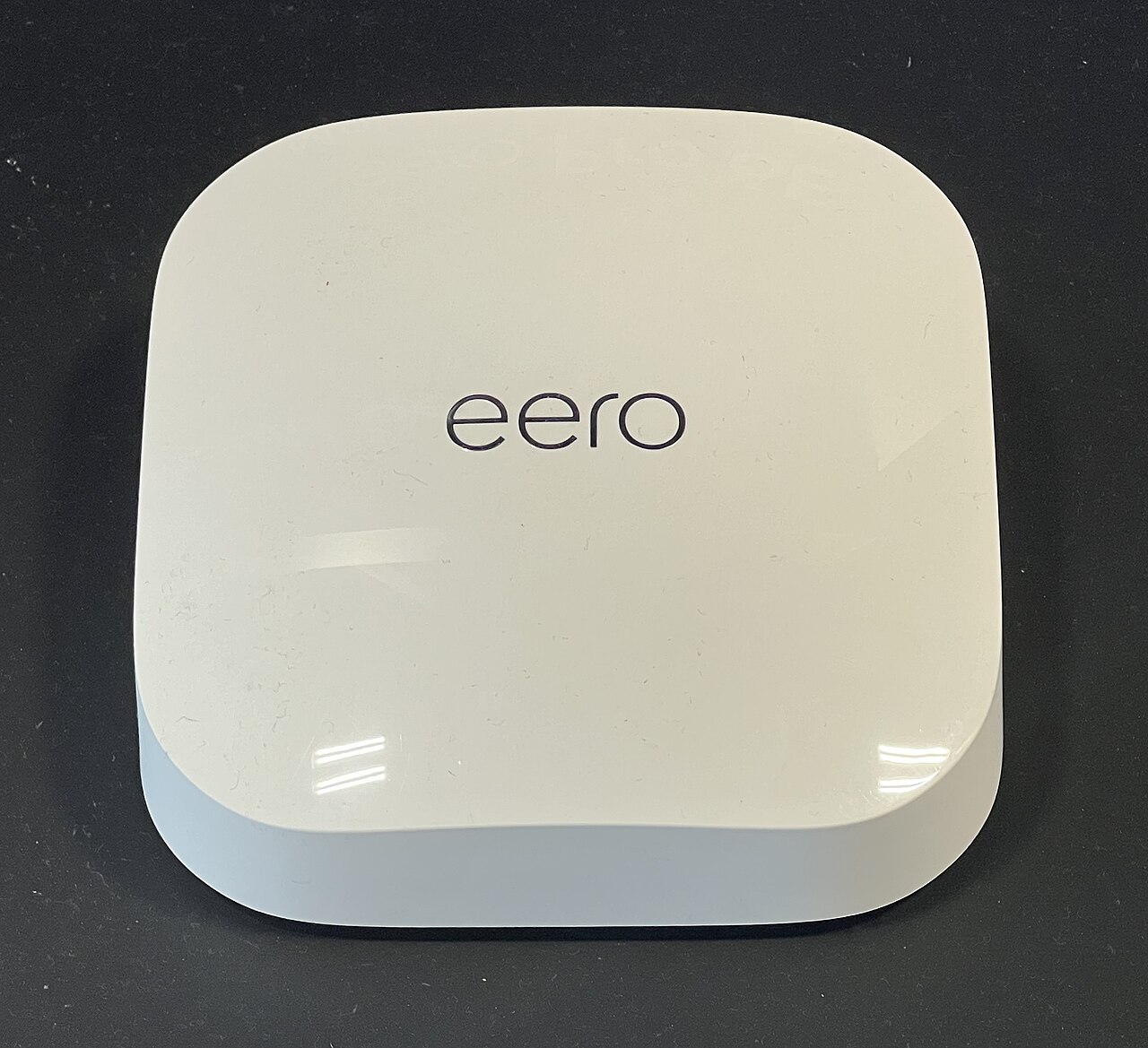
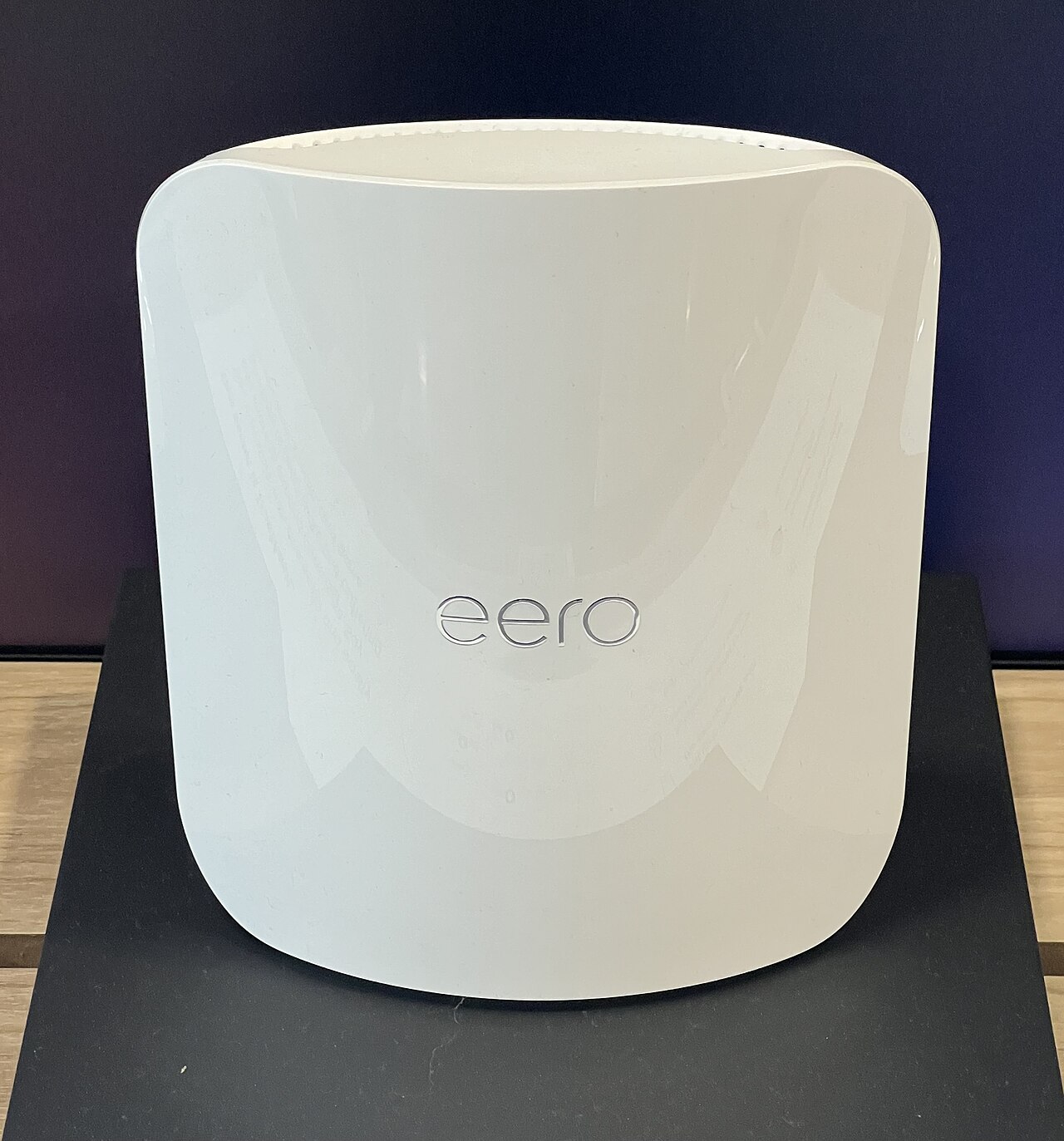
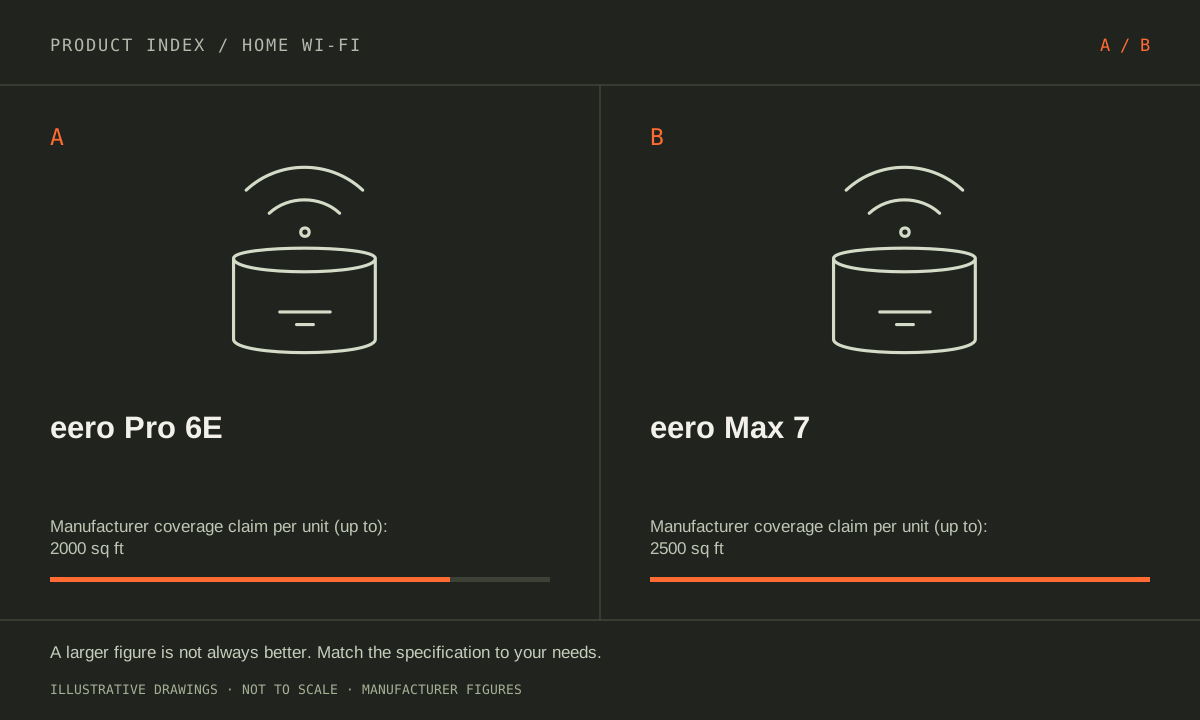
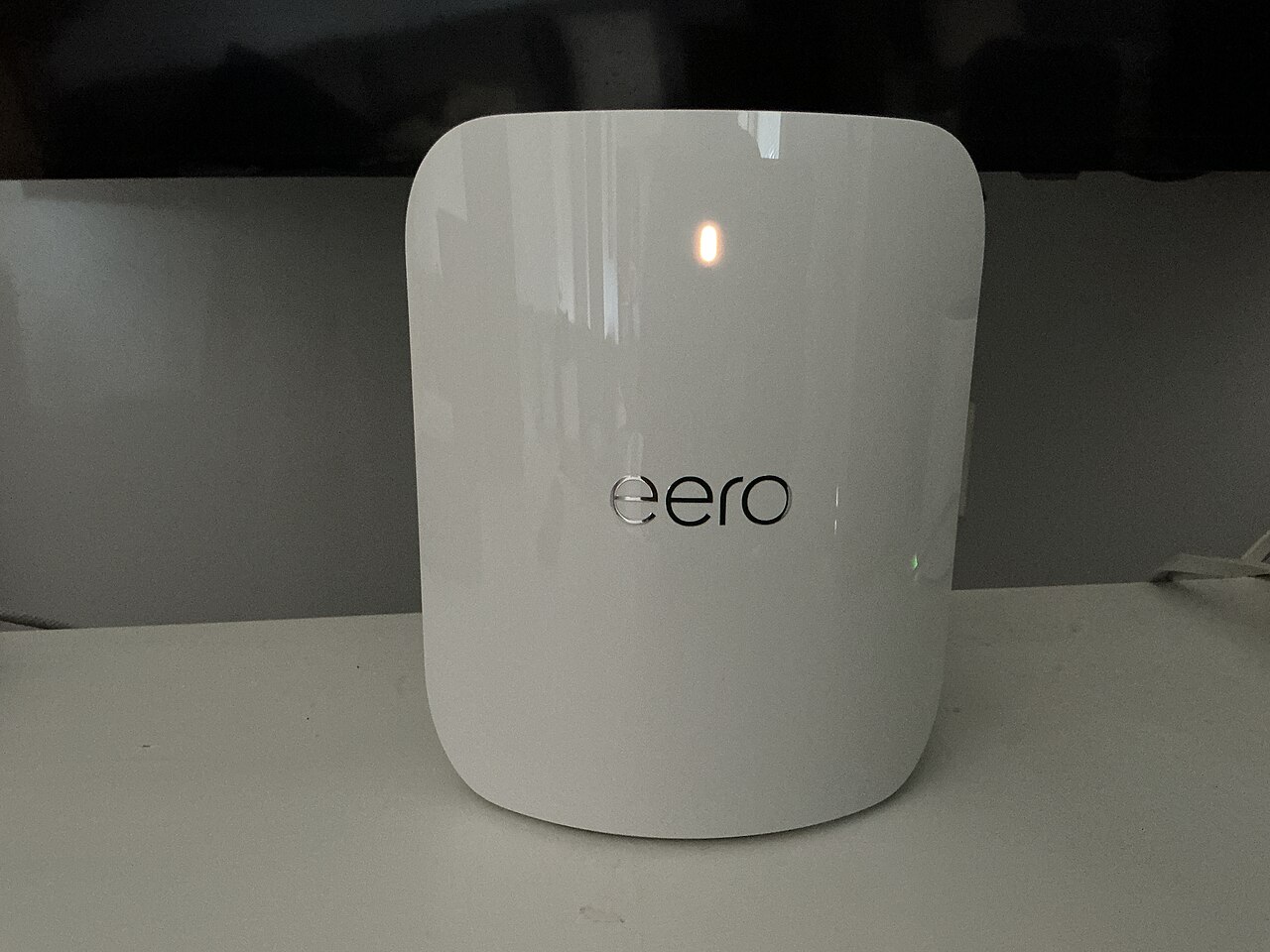
The facts, side by side.
Manufacturer specifications for the named models. On small screens, scroll the table sideways. A blank research field means the fact was not included here, not that the manufacturer does not publish it. Conditions and differently scoped specifications are kept separate.
| What matters | eero Pro 6E [1] | eero Max 7 [2] |
|---|---|---|
| Wi-Fi generation | Wi-Fi 6E (802.11ax with 6 GHz) | Wi-Fi 7 (802.11be) |
| Radio bands | Tri-band: 2.4, 5 and 6 GHz | Tri-band: 2.4, 5 and 6 GHz |
| Ethernet ports | 1 × 2.5 GbE; 1 × 1 GbE | 2 × 10 GbE; 2 × 2.5 GbE |
| Maximum channel width | 160 MHz | 320 MHz (compatible 6 GHz operation) |
| Manufacturer coverage claim | Up to 2,000 sq ft per unit; conditions apply | Up to 2,500 sq ft per unit; conditions apply |
| Role | Gateway router or mesh access point | Gateway router or mesh access point |
Listed maximums are manufacturer claims under their stated conditions, not results from our own testing. Regional versions and bundles can differ. No live prices or stock claims are shown.
An extra fast port can solve a specific wiring limitation
Pro 6E has one 2.5 GbE and one 1 GbE port. Max 7 has two 10 GbE plus two 2.5 GbE ports. That changes what remains available after the internet uplink is connected. A buyer planning a faster wired computer or a wired mesh link should count the connection at each end instead of choosing from an aggregate wireless headline.
Draw the route from the internet equipment to the router and then to the device or next node. Include the network adapters and any switch in the route. One slower connection can limit that path, and a faster router does not replace an incompatible client adapter. This makes Max 7 worth investigating when multi-gigabit wiring is part of a concrete plan. If the household mainly uses a slower internet service and gigabit clients, the additional port capacity may offer little immediate change. Buy the path you can use now or explain clearly in an upgrade plan.
Manufacturer references: eero Pro 6E · eero Max 7
Both have 6 GHz; Wi-Fi 7 still needs a matching client
Pro 6E is a Wi-Fi 6E device; Max 7 is Wi-Fi 7. Both provide 2.4, 5, and 6 GHz bands. A client’s own hardware and supported features determine which capabilities are available in its connection, so an older phone should not be used as the sole justification for a Wi-Fi 7 purchase.
Inventory the few devices that matter most: a workstation, gaming computer, frequently used laptop, or nearby media device. Check their exact wireless capabilities and usual location. Then identify whether a wired connection would solve the same problem more directly. Avoid treating a new generation as a guarantee of lower latency or more speed in every room. Performance depends on the radio link, the network load, node placement, and the outside service. A useful upgrade has a clear bottleneck to remove, rather than a feature list that requires several other purchases before it becomes relevant.
Manufacturer references: eero Pro 6E · eero Max 7
Plan a mesh as a network, not a collection of boxes
eero lists up to 2,000 sq ft per Pro 6E and 2,500 sq ft per Max 7, with real coverage affected by placement and building conditions. eero also warns that mixing Max 7 with older-generation units may reduce network performance. Neither headline gives a reliable prediction for a particular difficult room.
Map where the gateway must sit and where additional nodes can be placed with power and, if available, Ethernet. Decide whether you are replacing every node or adding to an existing network; those are different projects. Compare the same number of units and include any switch or wiring work in the total plan. I would keep Pro 6E on the shortlist for compatible 6 GHz clients when its port limits are sufficient. I would investigate Max 7 for a multi-gigabit wired plan or supported Wi-Fi 7 clients with a clear use for the extra capabilities. Expensive hardware alone cannot repair unsuitable node placement.
Manufacturer references: eero Pro 6E · eero Max 7
A CLOSER LOOK AT OWNERSHIP
Beyond the specification sheet.
Additional model-specific document research checked October 20, 2026. The original comparison’s specification check date remains shown above.
Check the complete setup before ordering
Pro 6E’s 2.5 GbE uplink leaves its gigabit port for the local wired network. If another router handles routing, bridging the eeros also removes profiles, device blocking, IP reservations, and port forwarding from the eero app. Resolve that control requirement before choosing a paid service or assuming a Pro label preserves it.
Max 7’s documented high-rate Ethernet ports are useful only within a coherent wired path. Assign internet, backhaul, and local devices to ports on paper, then check each endpoint. For wireless improvement, confirm the client devices and placement rather than assuming the highest router tier changes every connection.
Sources: eero Pro 6E — manufacturer model information; no independent performance test (opens in a new tab) · eero bridge-mode support — mode-dependent feature restrictions (opens in a new tab) · eero bridge-mode restrictions — profiles, blocking, reservations and port forwarding (opens in a new tab) · eero security updates — purchase-channel and date conditions (opens in a new tab) · eero Max 7 — manufacturer model information; no independent performance test (opens in a new tab)
Price the equipment you will actually use
Include switches and appropriate cabling in the Pro 6E price if multiple fixed devices need Ethernet. Distinguish optional eero Plus services from basic hardware ownership and check current renewal conditions. Compare a complete network layout against the newer model, not merely two single-unit shelf prices.
Quote Max 7 with any required switches, cabling, and additional mesh units. Identify which expensive components can be reused and which are missing. Check optional subscription features separately. A single Max 7 is a different purchase from a three-location system even when the model name is identical.
Sources: eero Pro 6E — manufacturer model information; no independent performance test (opens in a new tab) · eero bridge-mode support — mode-dependent feature restrictions (opens in a new tab) · eero bridge-mode restrictions — profiles, blocking, reservations and port forwarding (opens in a new tab) · eero security updates — purchase-channel and date conditions (opens in a new tab) · eero Max 7 — manufacturer model information; no independent performance test (opens in a new tab)
Plan care, parts, and the service route
Pro 6E is listed for security updates through at least October 31, 2031 in the checked policy. The separate five-year-from-purchase guarantee applies to new units bought on eero.com or Amazon.com, with the later date controlling. Save the receipt; a secondhand or other-seller purchase should not be assigned a fresh five-year period.
Max 7’s published minimum security-update date is October 31, 2031 at this check. New eero.com or Amazon.com purchases also receive at least five years from purchase when that ends later. Keep a receipt and distinguish that promise from hardware warranty coverage. An older network still receiving updates does not need replacement solely because Max 7 exists.
Sources: eero Pro 6E — manufacturer model information; no independent performance test (opens in a new tab) · eero bridge-mode support — mode-dependent feature restrictions (opens in a new tab) · eero bridge-mode restrictions — profiles, blocking, reservations and port forwarding (opens in a new tab) · eero security updates — purchase-channel and date conditions (opens in a new tab) · eero Max 7 — manufacturer model information; no independent performance test (opens in a new tab)
What rules each option out—and when to keep what you own
The important upgrade question is whether Pro 6E’s port arrangement constrains a real network path. Max 7 provides a different multi-gigabit port budget, but every switch and endpoint in that path must be considered. Rule out a Max 7 purchase as a solution to an outside-service limit or a dead spot caused by an unchanged poor node location.
Keep Pro 6E when its present connections satisfy the household. Before replacing it, test a wired baseline and note which room or device fails. If purchasing Max 7, price the required switch, network adapters, and backhaul work alongside the router, and check which older eero nodes will remain in the installation rather than assuming every link becomes faster.
Sources: eero Pro 6E — manufacturer model information; no independent performance test (opens in a new tab) · eero bridge-mode support — mode-dependent feature restrictions (opens in a new tab) · eero bridge-mode restrictions — profiles, blocking, reservations and port forwarding (opens in a new tab) · eero security updates — purchase-channel and date conditions (opens in a new tab) · eero Max 7 — manufacturer model information; no independent performance test (opens in a new tab)
THE REST OF THE BUYING DECISION
Think beyond the upgrade.
A good home network delivers dependable service where people use it. The largest advertised speed or a newer Wi-Fi generation is not automatically the solution to a slow bedroom, unreliable call, or busy household. Start by identifying where the problem occurs, then compare coverage, wired connections, client support, configuration, and ownership costs. This is a documented buying framework, not a claim that we measured these routers in your home.
The home wi-fi field guide covers the broader ownership questions, with source-specific examples. It complements this exact-model comparison; its examples do not establish features or policies for every model here.
MAKE IT YOUR DECISION
Your before-you-buy checklist.
Use this as a final check, alongside the model-specific evidence above.
Check off the questions you have resolved. Nothing is sent to a server.
Before you place the order.
- Match the full model name and generation. A similarly named bundle may have different accessories.
- Confirm the total price, seller, warranty eligibility, delivery estimate, and return terms at checkout.
- Account for any accessories or compatible equipment your setup needs. An upgrade only has value if you will use it.
Your product questions, answered.
Will Max 7 make every old device connect using Wi-Fi 7?
No. Each client keeps its own supported Wi-Fi capabilities; newer router features require compatible client hardware and settings.
Can Max 7 join an existing eero mesh?
eero says it can, while warning that mixing generations may reduce network performance. Plan the whole network instead of assuming one replacement upgrades every link.
Will Max 7 make my internet plan faster?
It cannot increase the service supplied by your provider. It may remove a local limitation only when that limitation is the router and the rest of the network supports the change.
Sources: eero Pro 6E — manufacturer model information; no independent performance test (opens in a new tab) · eero bridge-mode support — mode-dependent feature restrictions (opens in a new tab) · eero bridge-mode restrictions — profiles, blocking, reservations and port forwarding (opens in a new tab) · eero security updates — purchase-channel and date conditions (opens in a new tab) · eero Max 7 — manufacturer model information; no independent performance test (opens in a new tab)
What should I check before upgrading for local file transfers?
Map the computer, storage device, adapters, switch, and router path. A slower link anywhere in that route can limit the transfer despite faster sockets elsewhere.
Sources: eero Pro 6E — manufacturer model information; no independent performance test (opens in a new tab) · eero bridge-mode support — mode-dependent feature restrictions (opens in a new tab) · eero bridge-mode restrictions — profiles, blocking, reservations and port forwarding (opens in a new tab) · eero security updates — purchase-channel and date conditions (opens in a new tab) · eero Max 7 — manufacturer model information; no independent performance test (opens in a new tab)
Does replacing the gateway fix every weak room?
No. Check node placement, obstructions, and the connection between nodes. A newer gateway in the same poor layout does not establish better service at every location.
Sources: eero Pro 6E — manufacturer model information; no independent performance test (opens in a new tab) · eero bridge-mode support — mode-dependent feature restrictions (opens in a new tab) · eero bridge-mode restrictions — profiles, blocking, reservations and port forwarding (opens in a new tab) · eero security updates — purchase-channel and date conditions (opens in a new tab) · eero Max 7 — manufacturer model information; no independent performance test (opens in a new tab)
What costs are easy to overlook?
Multi-gigabit switches and adapters, additional nodes, installation work, and any optional services you choose. Compare the complete topology rather than one router price.
Sources: eero Pro 6E — manufacturer model information; no independent performance test (opens in a new tab) · eero bridge-mode support — mode-dependent feature restrictions (opens in a new tab) · eero bridge-mode restrictions — profiles, blocking, reservations and port forwarding (opens in a new tab) · eero security updates — purchase-channel and date conditions (opens in a new tab) · eero Max 7 — manufacturer model information; no independent performance test (opens in a new tab)
Sources & limitations.
Original comparison research: October 18, 2026. Individual product-source checks and ownership additions carry their own dates. These links identify the manufacturer evidence used for the specifications. Recommendations and practical implications are our editorial judgments. We have not measured performance, reliability, comfort, or long-term ownership for this comparison.
- eero Pro 6E (US) — manufacturer specifications (opens in a new tab)
eero — model differences and per-unit coverage (opens in a new tab)
Checked October 18, 2026. - eero Max 7 (US) — manufacturer specifications (opens in a new tab)
eero — radio bandwidths by model (opens in a new tab)
Checked October 18, 2026.
Confirm current specifications for your region and exact bundle. Read our research and correction approach.