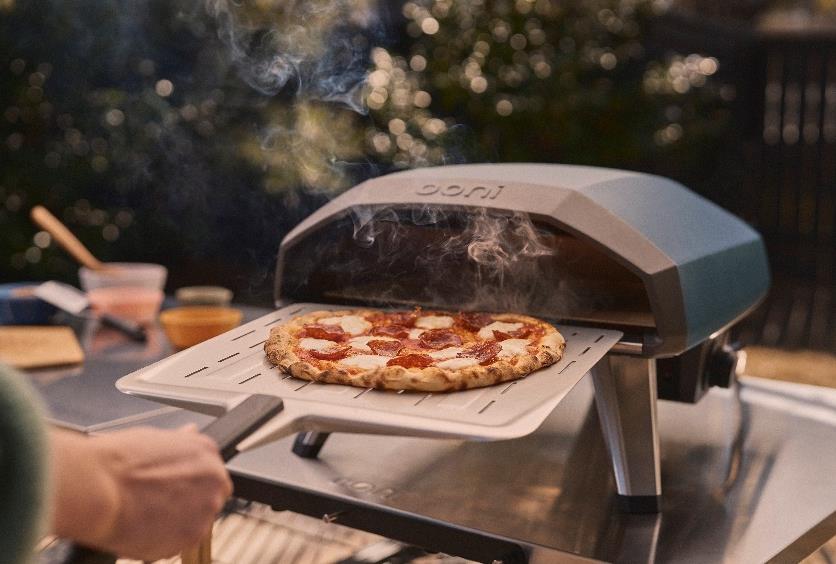
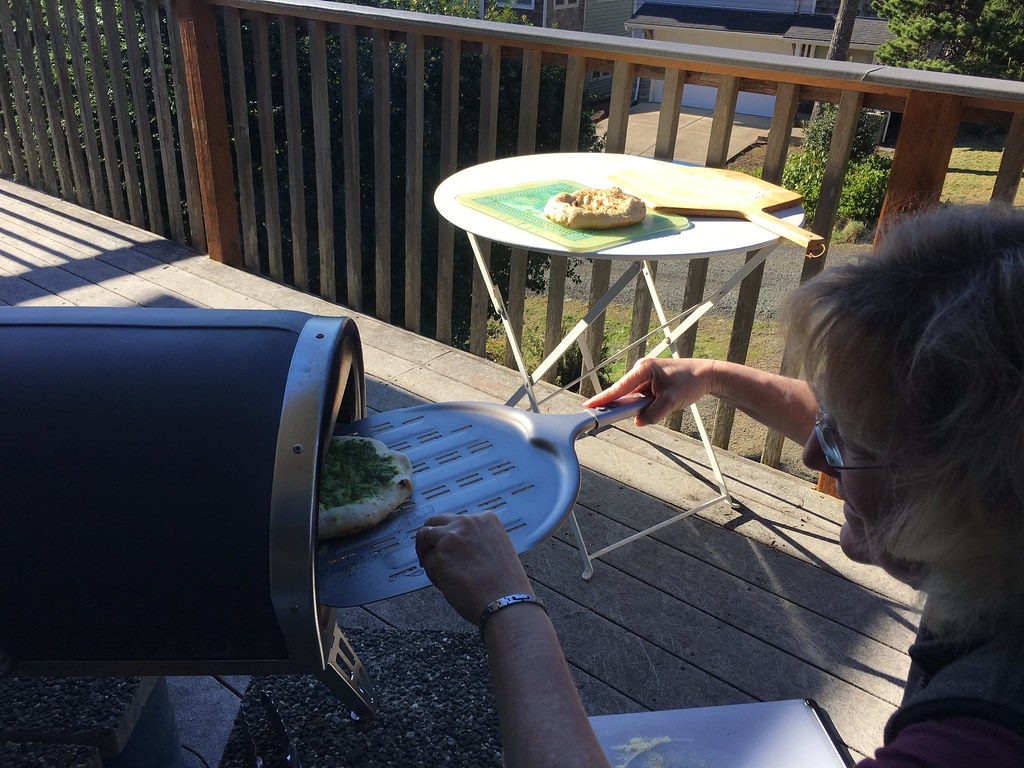
THE DIFFERENCES THAT MATTER
Ooni Koda 16 vs Karu 2: a large gas pizza station or smaller multi-fuel cooking?
Compare the first-generation 16-inch Koda with the 12-inch Karu 2 on fuel workflow, pizza capacity, and complete accessory needs.
Researched from manufacturer sources. These products have not been hands-on tested for this article.
START HERE
Is your priority a larger pizza or the option to cook over wood and charcoal?
Koda 16 and Karu 2 differ in two substantial ways at once: pizza capacity and fuel routine. The first-generation Koda 16 is a gas oven for pizzas up to sixteen inches. Karu 2 takes pizzas up to twelve inches and supports solid fuel, with gas through an extra burner. Choose around the evening you want to cook, rather than expecting one oven to win every dimension.
Ooni Koda 16 – 1st Generation
A good fit if: For buyers who want larger pizzas and a gas cooking routine.
The tradeoff: The larger cooking capacity requires planning the outdoor station and storage around it.
Ooni Karu 2 – 2nd Generation
A good fit if: For buyers who want to manage a wood or charcoal fire and keep a separately purchased gas option.
The tradeoff: It takes smaller pizzas, and gas capability needs the appropriate additional burner.
As an Amazon Associate I earn from qualifying purchases. How shopping links work.
Ooni Koda 16
View this model on Amazon : Ooni Koda 16 – 1st Generation (opens in a new tab)Check the seller, exact variant, price and included accessories.Ooni Karu 2
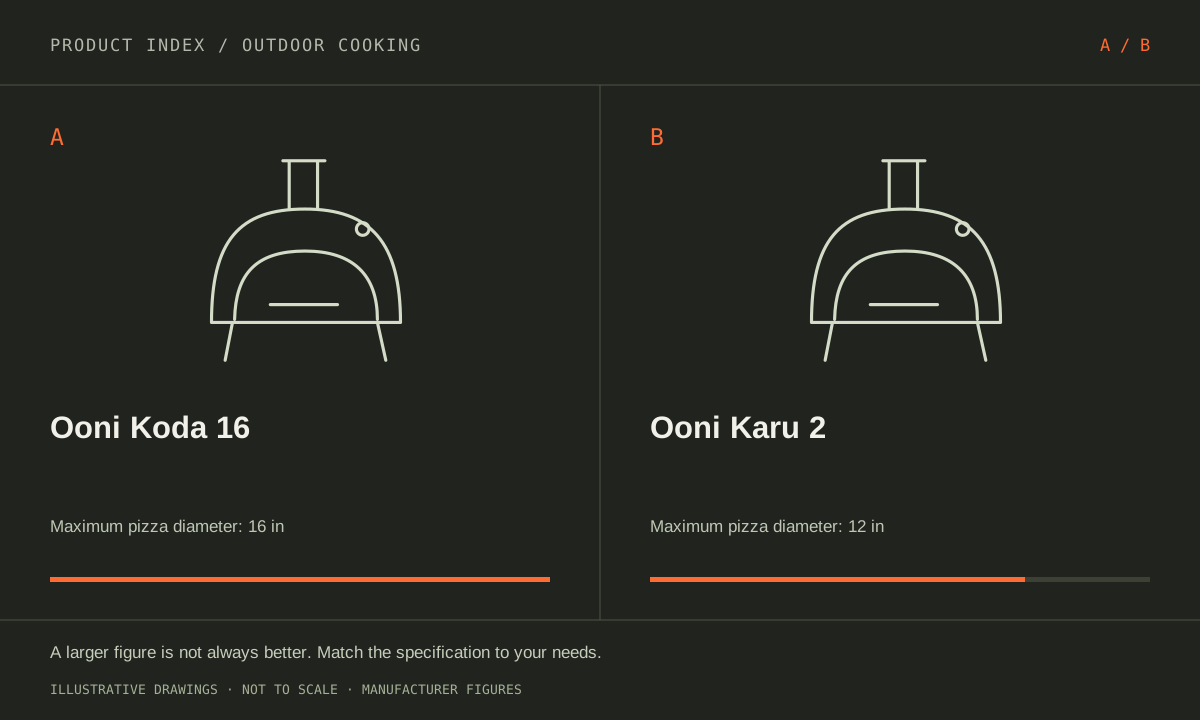
View this model on Amazon : Ooni Karu 2 – 2nd Generation (opens in a new tab)Check the seller, exact variant, price and included accessories.See the product photos and comparison illustration
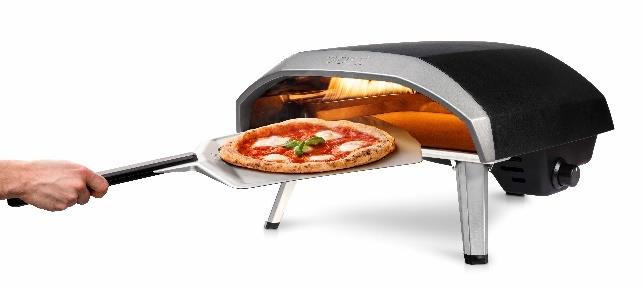
The facts, side by side.
Manufacturer specifications for the named models. On small screens, scroll the table sideways. A blank research field means the fact was not included here, not that the manufacturer does not publish it. Conditions and differently scoped specifications are kept separate.
| What matters | Ooni Koda 16 [1] | Ooni Karu 2 [2] |
|---|---|---|
| Maximum pizza diameter | 16 in | 12 in |
| Fuel | Gas; propane / natural-gas variants, confirm exact setup | Wood / charcoal; gas burner sold separately |
| Burner / fire design | L-shaped gas burner | Rear fuel tray; glass door; built-in thermometer |
| Maximum temperature | Up to 950°F; manufacturer claim | Up to 950°F; manufacturer claim |
| Stone thickness | 15 mm cordierite | 15 mm cordierite |
| Placement | Outdoor use | Outdoor use |
Listed maximums are manufacturer claims under their stated conditions, not results from our own testing. Regional versions and bundles can differ. No live prices or stock claims are shown.
Sixteen inches and twelve inches support different plans
A sixteen-inch pizza is a meaningful step up from a twelve-inch pizza when both are made at their stated maximum diameter. Geometrically, a sixteen-inch circle has about seventy-eight percent more area. That calculation is useful for visualizing the size difference, but it cannot predict the number of people fed: thickness, toppings, side dishes, and appetite all change that. A larger opening also does not by itself prove an oven is easier to launch into or turn a pizza inside.
Koda 16 is the more direct candidate if large shared pizzas are a firm requirement. Karu 2 can make sense for smaller individual pies and sessions where guests choose their own toppings. Do not assume that smaller pizzas automatically produce faster service or that larger pizzas are always more efficient. Dough handling, stone recovery, and your own turning routine affect the pace. We have no measured head-to-head output figures for a party and would not invent them from the diameter alone.
Manufacturer references: Ooni Koda 16 · Ooni Karu 2
The fuel process should match your appetite for involvement
Koda 16 uses an L-shaped gas burner, with propane or natural-gas configurations requiring confirmation of the exact model and approved setup. Karu 2 uses wood or charcoal through its rear fuel arrangement and offers a separate compatible gas burner. The Karu’s glass door and chimney are part of that cooking setup. A person who enjoys managing fuel may value this flexibility; a person who wants to focus on shaping and turning pizza may prefer a dedicated gas routine.
Neither fuel label establishes a flavor winner. We have not run blind tasting or matched dough tests, and a manufacturer description of wood-fired cooking is not evidence that every buyer will prefer its taste. The reliable distinction is the task list: solid-fuel cooking involves managing the fuel process, while gas offers adjustment through its controls. Choose the involvement you want repeatedly, including cleanup afterward, instead of the version of outdoor cooking that looks most appealing in a single photograph.
Manufacturer references: Ooni Koda 16 · Ooni Karu 2
Compare complete stations rather than isolated oven prices
If you plan to run Karu 2 on gas, include its separately sold burner in the budget. If you want Koda 16 on natural gas, verify the correct configuration and connection requirements before ordering. Accessories and regional variants can change the true comparison considerably. Both documented ovens use fifteen-millimeter cordierite stones and claim temperatures up to 950°F; those shared facts do not cancel the differences in usable pizza size, fuel management, or the equipment surrounding the oven.
Plan an appropriate outdoor location with the clearances specified in the relevant manual, room for a peel, a preparation surface, and a place for fuel and storage. Published product weights can be inconsistent within these listings, so we do not use a precise weight difference as the recommendation. We would choose Koda 16 for a larger gas pizza station and Karu 2 when solid-fuel choice is central and twelve-inch capacity is sufficient. Compare current seller packages only once that purpose is clear.
Manufacturer references: Ooni Koda 16 · Ooni Karu 2
A CLOSER LOOK AT OWNERSHIP
Beyond the specification sheet.
Additional model-specific document research checked October 20, 2026. The original comparison’s specification check date remains shown above.
Set up the version you are actually buying
Koda 16 needs a station suitable for its larger pizza capacity and the exact gas configuration ordered. Verify propane versus natural-gas supply and any manufacturer-authorized conversion requirements before purchase. Do not infer approval from the fact that another Koda model uses gas. Allow space to launch, turn and remove the food in addition to the clearances in the manual.
Karu 2 is the 12-inch model, distinct from Karu 2 Pro. Decide first whether wood or charcoal management is part of the experience you want. Read the instructions for the fuel and door arrangement you intend to use and plan an outdoor station accordingly. The ability to accept another fuel system does not make every burner or configuration interchangeable.
Sources: Ooni Koda 16 – 1st Generation — official model information (opens in a new tab) · Ooni Karu 2 – 2nd Generation — official model information (opens in a new tab) · Ooni — stone care and cleaning (opens in a new tab) · Ooni US — warranty terms (opens in a new tab)
Price the useful package and recurring supplies
Price the complete gas setup and the correctly sized peel rather than the oven alone. Check replacement stone dimensions against Koda 16 and keep its care instructions with the oven. The bigger cooking opening may be useful even when you make smaller pizzas, but it is not measured proof of easier operation. Confirm handling and storage practically, because product weight wording has varied across listings.
A gas burner is a separate purchase for this documented Karu 2 package. Include the exact compatible burner and required supply hardware only if gas is part of your plan. Solid-fuel use brings fuel storage and ash handling into the ownership routine. Compare those tasks with a gas-only oven before treating multi-fuel flexibility as a feature you will use automatically.
Sources: Ooni Koda 16 – 1st Generation — official model information (opens in a new tab) · Ooni — stone care and cleaning (opens in a new tab) · Ooni US — warranty terms (opens in a new tab) · Ooni — Great Pizza Guarantee conditions (opens in a new tab) · Ooni Karu 2 – 2nd Generation — official model information (opens in a new tab)
Understand maintenance, repair and service scope
For Ooni Koda 16: Follow the oven-specific fuel and cooling procedure and Ooni’s stone-care guidance. Scraping and heat treatment of a stone are different from washing metal cookware; do not improvise with another appliance’s cleaning method. Include the peel, preparation surface, fuel handling and eventual cooled storage when estimating how often you will enjoy using the oven.
For Ooni Karu 2: Ooni’s warranty and Great Pizza Guarantee are separate documents with their own conditions. Check the current terms for the model, seller and region before relying on either. Ask about replacement stones and approved fuel accessories. A stated bake time cannot establish party throughput, since dough preparation, handling and the sequence of pizzas still belong to the owner.
Sources: Ooni Koda 16 – 1st Generation — official model information (opens in a new tab) · Ooni — stone care and cleaning (opens in a new tab) · Ooni US — warranty terms (opens in a new tab) · Ooni — Great Pizza Guarantee conditions (opens in a new tab) · Ooni Karu 2 – 2nd Generation — official model information (opens in a new tab)
What rules one out—and when to keep what you own
Choose the Koda 16 direction for larger gas-cooked pizzas and the Karu 2 direction for a smaller solid-fuel routine with a separately purchased gas option. Rule out Karu when 16-inch pizzas are a firm requirement. Rule out Koda when wood or charcoal cooking is the essential part of the brief.
Keep the oven that already matches the fuel you use most and the pizza size you prefer. The two products’ similar maximum-temperature claims do not erase their workflow differences or establish equal serving speed. Price the complete fuel setup and peel collection before comparing the base ovens, especially when adding Karu’s gas burner.
Sources: Ooni Koda 16 – 1st Generation — official model information (opens in a new tab) · Ooni — stone care and cleaning (opens in a new tab) · Ooni US — warranty terms (opens in a new tab) · Ooni — Great Pizza Guarantee conditions (opens in a new tab) · Ooni Karu 2 – 2nd Generation — official model information (opens in a new tab)
THE REST OF THE BUYING DECISION
Think beyond the upgrade.
Start with what you want to cook and where you can safely cook it. Fuel, usable space, preparation, cleanup and storage all shape whether an outdoor appliance earns its place. This guide draws on manufacturer setup and care documents; it does not claim measured temperature uniformity, cooking results or long-term weather resistance.
The outdoor cooking field guide covers the broader ownership questions, with source-specific examples. It complements this exact-model comparison; its examples do not establish features or policies for every model here.
MAKE IT YOUR DECISION
Your before-you-buy checklist.
Use this as a final check, alongside the model-specific evidence above.
Check off the questions you have resolved. Nothing is sent to a server.
Before you place the order.
- Match the full model name and generation. A similarly named bundle may have different accessories.
- Confirm the total price, seller, warranty eligibility, delivery estimate, and return terms at checkout.
- Account for any accessories or compatible equipment your setup needs. An upgrade only has value if you will use it.
Your product questions, answered.
Does Karu 2 cook a sixteen-inch pizza?
No. The cited Karu 2 is the twelve-inch model. Karu 2 Pro is a different product and should not be confused with it.
Does a sixty-second bake claim guarantee party throughput?
No. Such claims describe suitable high-temperature bakes; preparation, toppings, turning, and stone recovery also determine how quickly you serve a group.
Can Karu 2 make the same maximum pizza diameter as Koda 16?
No. The documented Karu 2 is 12-inch. Do not substitute specifications from Karu 2 Pro when comparing these exact models.
Sources: Ooni Koda 16 – 1st Generation — official model information (opens in a new tab) · Ooni — stone care and cleaning (opens in a new tab) · Ooni US — warranty terms (opens in a new tab) · Ooni — Great Pizza Guarantee conditions (opens in a new tab) · Ooni Karu 2 – 2nd Generation — official model information (opens in a new tab)
Does a similar maximum temperature make the ovens interchangeable?
No. Fuel handling, cooking space, accessories and the operating sequence differ. Maximum heat alone does not describe the complete experience.
Sources: Ooni Koda 16 – 1st Generation — official model information (opens in a new tab) · Ooni — stone care and cleaning (opens in a new tab) · Ooni US — warranty terms (opens in a new tab) · Ooni — Great Pizza Guarantee conditions (opens in a new tab) · Ooni Karu 2 – 2nd Generation — official model information (opens in a new tab)
What would make Koda 16 unnecessary for my household?
Regularly making smaller pizzas with a fuel routine your existing oven already supports. Additional maximum diameter is not automatically a useful upgrade if neither your food nor your handling space requires it.
Sources: Ooni Koda 16 – 1st Generation — official model information (opens in a new tab) · Ooni — stone care and cleaning (opens in a new tab) · Ooni US — warranty terms (opens in a new tab) · Ooni — Great Pizza Guarantee conditions (opens in a new tab) · Ooni Karu 2 – 2nd Generation — official model information (opens in a new tab)
How should I plan serving several pizzas?
Work through dough preparation, topping, launching, turning and serving as a sequence. Neither oven’s maximum heat or short bake claim supplies a tested estimate of your full party workflow.
Sources: Ooni Koda 16 – 1st Generation — official model information (opens in a new tab) · Ooni — stone care and cleaning (opens in a new tab) · Ooni US — warranty terms (opens in a new tab) · Ooni — Great Pizza Guarantee conditions (opens in a new tab) · Ooni Karu 2 – 2nd Generation — official model information (opens in a new tab)
Sources & limitations.
Original comparison research: October 18, 2026. Individual product-source checks and ownership additions carry their own dates. These links identify the manufacturer evidence used for the specifications. Recommendations and practical implications are our editorial judgments. We have not measured performance, reliability, comfort, or long-term ownership for this comparison.
- Ooni Koda 16 – 1st Generation — manufacturer specifications (opens in a new tab)
Checked October 18, 2026. - Ooni Karu 2 – 2nd Generation — manufacturer specifications (opens in a new tab)
Checked October 18, 2026.
Confirm current specifications for your region and exact bundle. Read our research and correction approach.