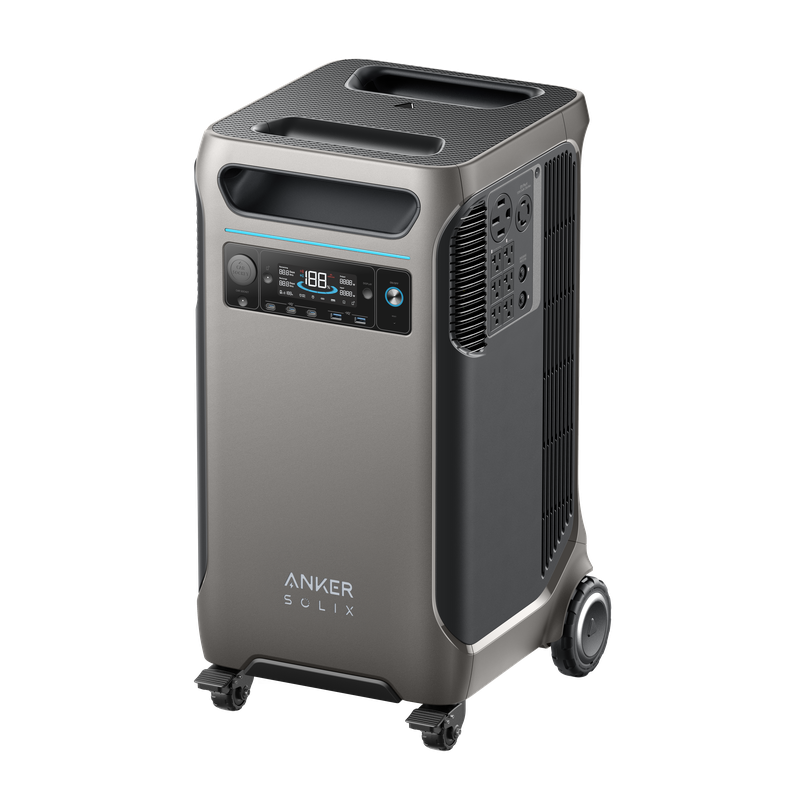
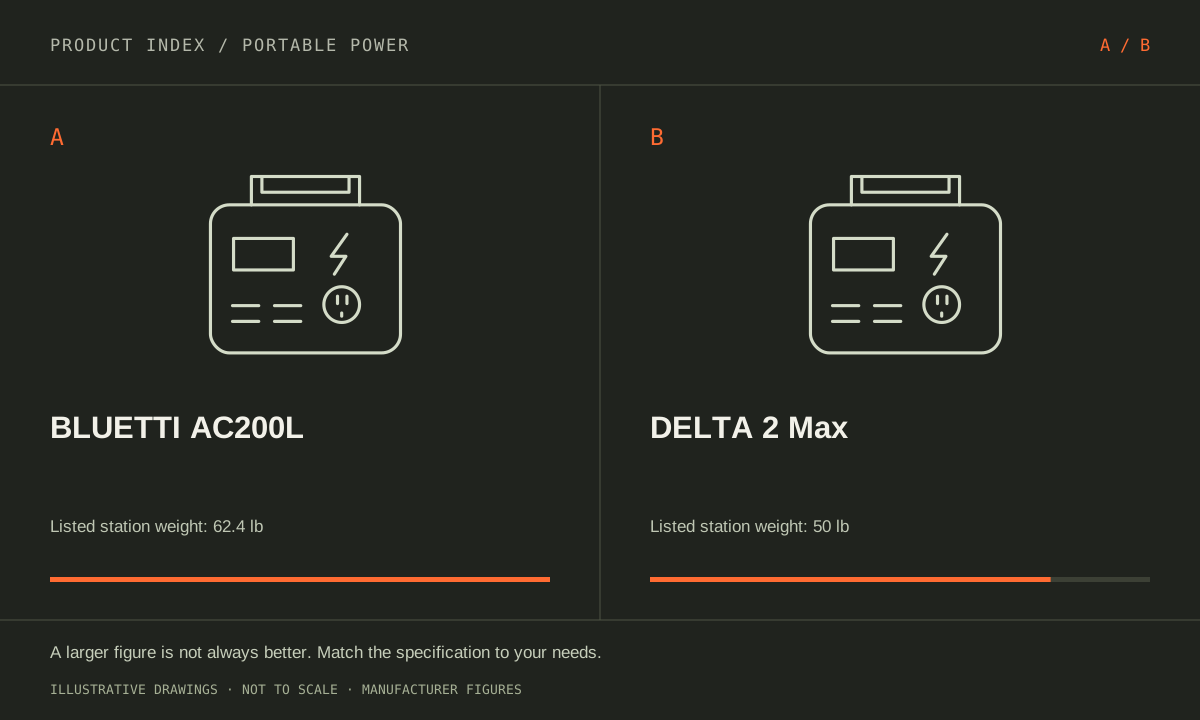
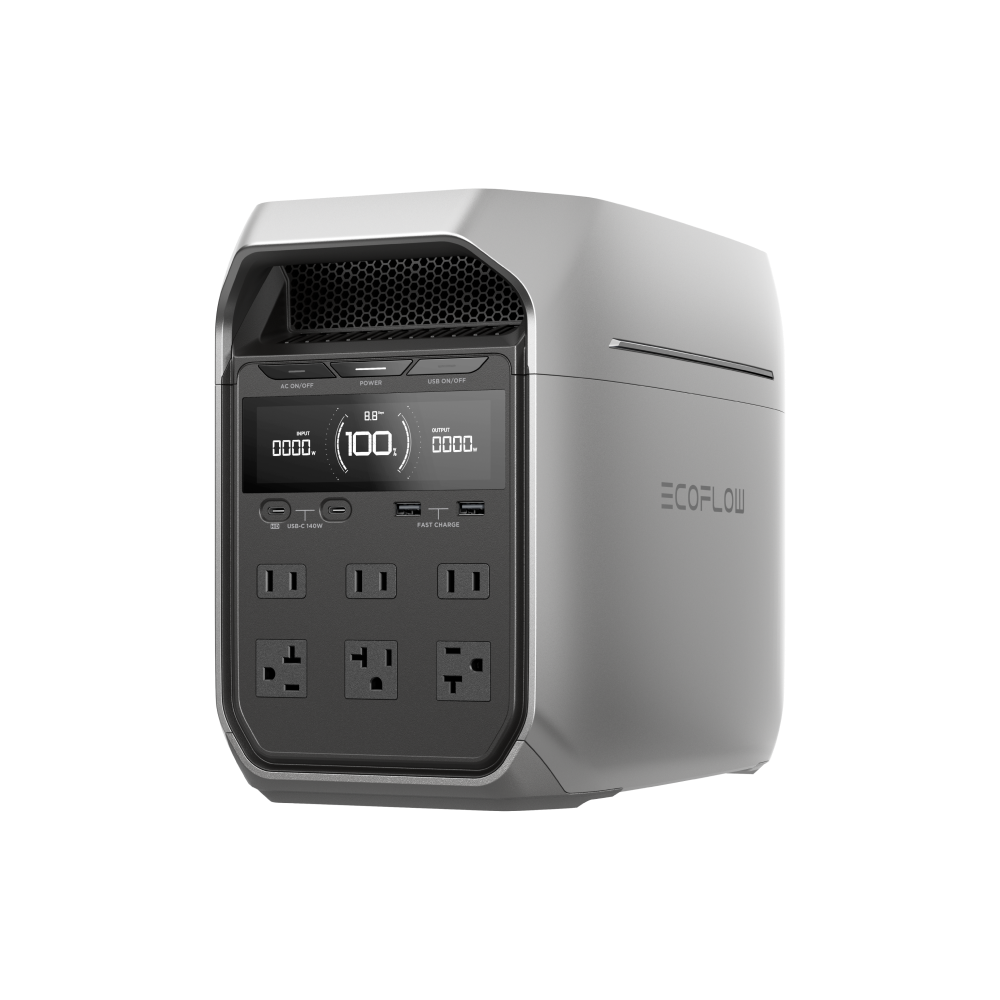
THE DIFFERENCES THAT MATTER
EcoFlow NextGen 220W vs Anker SOLIX PS400: panel compatibility and size
Compare exact monofacial folding panels on electrical compatibility, carrying footprint and realistic deployment.
Researched from manufacturer sources. These products have not been hands-on tested for this article.
START HERE
Can your station safely accept the larger panel, and will you actually deploy it at each charging stop?
EcoFlow NextGen 220 W monofacial and Anker SOLIX PS400 are folding solar panels, not batteries. Their 220 W and 400 W ratings describe output under specified test conditions, not the energy a day of camping guarantees. The electrical differences matter before the larger watt label: EcoFlow lists 21.5 V open circuit, while Anker lists 57.6 V. This compares the exact monofacial NextGen and A2437 PS400, not similarly named bifacial versions.
EcoFlow NextGen 220 W Portable Solar Panel (monofacial; EFSOLAR220W-NS)
A good fit if: A shortlist option when a smaller folding footprint and lower-voltage panel suit the station and packing plan.
The tradeoff: This exact listing is the monofacial NextGen model; do not substitute bifacial rear-output or lightweight-model specifications.
Anker SOLIX PS400 Portable Solar Panel (A2437)
A good fit if: A shortlist option when a compatible higher-voltage solar input and deployment area can use a larger panel.
The tradeoff: 57.6 V open circuit needs a voltage-limit check including cold-weather guidance; it is not the newer PS400 Bifacial.
As an Amazon Associate I earn from qualifying purchases. How shopping links work.
NextGen 220 W
View this model on Amazon : EcoFlow NextGen 220 W Portable Solar Panel (monofacial; EFSOLAR220W-NS) (opens in a new tab)NextGen monofacial EFSOLAR220W-NS; not the bifacial or later lightweight version.SOLIX PS400
View this model on Amazon : Anker SOLIX PS400 Portable Solar Panel (A2437) (opens in a new tab)PS400 A2437; verify delivered revision, not the newer PS400 Bifacial.See the product photos and comparison illustration
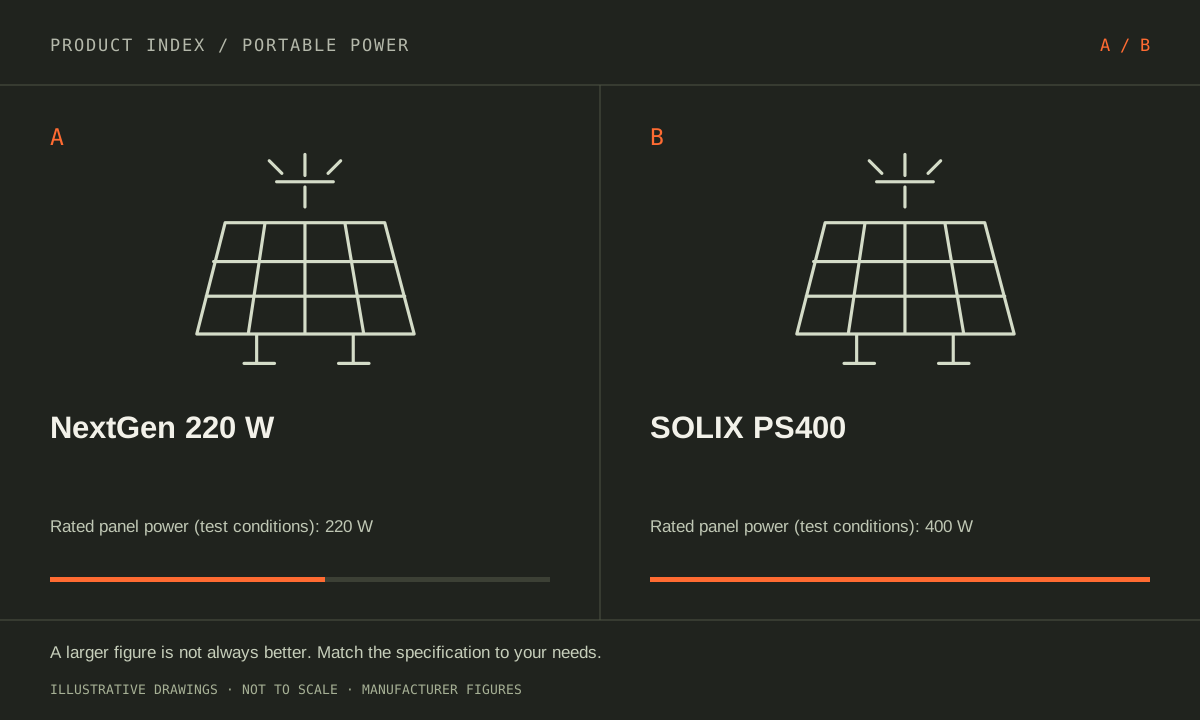
The facts, side by side.
Manufacturer specifications for the named models. On small screens, scroll the table sideways. A blank research field means the fact was not included here, not that the manufacturer does not publish it. Conditions and differently scoped specifications are kept separate.
| What matters | NextGen 220 W [1] | SOLIX PS400 [2] |
|---|---|---|
| Panel type | Monofacial folding portable panel; N-type TOPCon cells | Monocrystalline folding portable panel; four stand angles |
| Rated panel power | 220 W ±5 W under specified test conditions | 400 W under specified test conditions |
| Open-circuit voltage | 21.5 V | 57.6 V |
| Operating point | 18.4 V; 11.9 A | 48 V; 8.33 A |
| Folded dimensions | 23.6 × 22.5 × 1.3 in | 39 × 26.6 × 2 in |
| Connector | Photovoltaic connectors; solar-to-XT60i cable included | MC4; MC4-to-XT60 and extension cables included |
| Panel weight | Approximately 15.9 lb / 7.2 kg | 35.3 lb in US product table; guide lists 35.5 lb |
Listed maximums are manufacturer claims under their stated conditions, not results from our own testing. Regional versions and bundles can differ. No live prices or stock claims are shown.
Check voltage before adding watt ratings
Read the station’s solar-input voltage window, maximum current and permitted connections. Open-circuit voltage matters even when no load is drawing power. The PS400’s 57.6 V open-circuit specification leaves a different compatibility question from EcoFlow’s 21.5 V. Follow the panel and station guidance for temperature and any array design; a connector fitting physically does not make an electrical combination appropriate. Do not put panels in series simply to reach a preferred watt total.
The listed operating points also differ: EcoFlow specifies 18.4 V and 11.9 A, while Anker specifies 48 V and 8.33 A. A station can be limited by voltage, current or total input power. That makes a larger rated panel potentially useful on one station and inappropriate on another. Confirm the exact station revision, cable polarity and accepted connector arrangement. An MC4-to-XT60 cable is a connection component, not a device that automatically corrects an incompatible voltage.
Manufacturer references: NextGen 220 W · SOLIX PS400
Compare the folded object and the space it occupies outside
EcoFlow lists approximately 15.9 lb and a folded size of 23.6 by 22.5 by 1.3 inches for this monofacial NextGen model. Anker’s current US table lists 35.3 lb and 39 by 26.6 by 2 inches. Its guide gives a slightly different weight, which we flag. Use these as a packing and lifting check, then confirm the delivered revision. A cargo compartment that holds a battery may not accommodate a broad folded panel.
The PS400 unfolds to about 100 by 39 inches, so choose a real deployment area rather than imagining a panel leaning anywhere beside a tent. Consider shade from the vehicle, foot traffic, cable routing and the ability to change the angle. Anker provides four stand positions; EcoFlow has an integrated adjustable stand and angle guide. The panel that can be positioned and attended conveniently may fit your routine better even when another has a larger laboratory rating.
Manufacturer references: NextGen 220 W · SOLIX PS400
Treat daily energy as a site-specific result
Sun angle, cloud, shadows, heat, season and the station’s input limits affect collected energy. A 400 W panel is not a promise of 400 W for every daylight hour, and the comparison does not claim measured output from a shared test. Use a conservative charging plan based on the location and season. Identify what happens when poor weather prevents the expected recharge, especially if the station must run essential equipment overnight.
Keep the station and connectors within their own weather instructions; a panel’s environmental rating does not make the whole charging system equally protected. Both selected listings include connection cables, but inspect lengths and exact ends before assuming the station can remain in a suitable sheltered position. Favor EcoFlow when its smaller pack and lower-voltage operating arrangement meet the requirement. Favor PS400 when the verified input can accept it and the larger deployed panel earns its handling burden.
Manufacturer references: NextGen 220 W · SOLIX PS400
A CLOSER LOOK AT OWNERSHIP
Beyond the specification sheet.
Additional model-specific document research checked October 20, 2026. The original comparison’s specification check date remains shown above.
Check the complete setup before ordering
Verify the NextGen 220 W monofacial panel identity against the label before checking the receiving station. This comparison uses the matching official Mexico specification as model evidence, not as a US warranty promise. Have the station manufacturer approve the panel voltage, cable, polarity, and proposed array before connection.
For PS400, confirm the A2437 model and the receiving station’s allowed input before buying a connector adapter. The panel’s electrical requirements and physical size deserve separate checks. A larger rated panel is not a universal substitute for a lower-voltage panel, even when both are sold for portable power.
Sources: NextGen 220 W — manufacturer model information; no independent performance test (opens in a new tab) · SOLIX PS400 — manufacturer model information; no independent performance test (opens in a new tab)
Price the equipment you will actually use
Include the correct station adapter, extension cable, carrying arrangement, and a deployment location in the EcoFlow panel budget. Measure the usable ground area and the path back to the battery. Choose the quantity after checking the complete array; multiplying panel wattage does not by itself establish electrical compatibility.
Itemize the PS400 cables included in the selected package, any extra reach required, and the space needed for deployment. Reconcile the delivered manual and label if retailer dimensions or weight differ. If you cannot transport and set up the panel comfortably, a smaller verified array may be the more usable purchase.
Sources: NextGen 220 W — manufacturer model information; no independent performance test (opens in a new tab) · SOLIX PS400 — manufacturer model information; no independent performance test (opens in a new tab)
Plan care, parts, and the service route
Ask the US seller which manual and warranty cover the delivered monofacial panel. Confirm cleaning, storage, connector protection, and permitted weather exposure for that exact revision. Do not apply bifacial or lightweight-version instructions automatically. Current repair economics and damage coverage remain questions for the seller and manufacturer.
Ask Anker for the applicable A2437 care instructions and service terms, including damage to folding sections or connectors. The guide page did not expose its complete text in this research check, so we do not claim to have verified a cleaning procedure from it. Confirm the delivered documentation before use.
Sources: NextGen 220 W — manufacturer model information; no independent performance test (opens in a new tab) · SOLIX PS400 — manufacturer model information; no independent performance test (opens in a new tab)
What rules each option out—and when to keep what you own
The first pass/fail test is the receiving station’s electrical input, not rated panel wattage. Match the exact monofacial EcoFlow model and Anker A2437 revision. Rule out any proposed configuration whose voltage, current, polarity, or cabling has not been approved. Then check whether the unfolded panel and cable route fit the space you actually have available.
Keep an existing compatible panel when it replenishes the required energy during real use. A larger rating is useful only when deployment, weather, and the station input allow a benefit. Compare a smaller verified array or more convenient placement before buying a panel that is difficult to carry and therefore rarely leaves storage.
Sources: NextGen 220 W — manufacturer model information; no independent performance test (opens in a new tab) · SOLIX PS400 — manufacturer model information; no independent performance test (opens in a new tab)
THE REST OF THE BUYING DECISION
Think beyond the upgrade.
The best portable power station is the one that powers your essential equipment for the time you need, can be recharged where you use it, and is manageable to carry. Start with an equipment list, not a promotional wattage. This guide explains the decisions behind a useful shortlist; manufacturer specifications are evidence of stated capabilities, not our own runtime tests.
The portable power field guide covers the broader ownership questions, with source-specific examples. It complements this exact-model comparison; its examples do not establish features or policies for every model here.
MAKE IT YOUR DECISION
Your before-you-buy checklist.
Use this as a final check, alongside the model-specific evidence above.
Check off the questions you have resolved. Nothing is sent to a server.
Before you place the order.
- Match the full model name and generation. A similarly named bundle may have different accessories.
- Confirm the total price, seller, warranty eligibility, delivery estimate, and return terms at checkout.
- Account for any accessories or compatible equipment your setup needs. An upgrade only has value if you will use it.
Your product questions, answered.
Is this EcoFlow panel bifacial?
No. The verified EFSOLAR220W-NS listing is the monofacial NextGen model. Rear-output figures from bifacial versions do not apply.
Will the supplied XT60 cable make either panel compatible with every station?
No. Check voltage, current, polarity, cable and station instructions for the exact combination before connecting it.
Can I choose using watts alone?
No. The station input limits and complete connection arrangement determine compatibility. Have the station manufacturer verify the panel label and proposed array before comparing deployment convenience or rated output.
Sources: NextGen 220 W — manufacturer model information; no independent performance test (opens in a new tab) · SOLIX PS400 — manufacturer model information; no independent performance test (opens in a new tab)
Why does the EcoFlow source mention Mexico?
The matching official monofacial model specification was available there. It is model evidence, not proof of US seller warranty conditions. Confirm the delivered model and local service terms separately.
Sources: NextGen 220 W — manufacturer model information; no independent performance test (opens in a new tab) · SOLIX PS400 — manufacturer model information; no independent performance test (opens in a new tab)
What is unresolved for PS400 care?
The guide endpoint did not expose complete text during this check. Obtain the A2437 manual from Anker before applying cleaning, weather, folding, or connector-care instructions.
Sources: NextGen 220 W — manufacturer model information; no independent performance test (opens in a new tab) · SOLIX PS400 — manufacturer model information; no independent performance test (opens in a new tab)
What should be included in the total price?
Include the station adapter, appropriate extension cable, storage or carrying arrangement, and any approved array accessories. Also confirm whether you can deploy the panel without needing unplanned assistance.
Sources: NextGen 220 W — manufacturer model information; no independent performance test (opens in a new tab) · SOLIX PS400 — manufacturer model information; no independent performance test (opens in a new tab)
Sources & limitations.
Original comparison research: October 18, 2026. Individual product-source checks and ownership additions carry their own dates. These links identify the manufacturer evidence used for the specifications. Recommendations and practical implications are our editorial judgments. We have not measured performance, reliability, comfort, or long-term ownership for this comparison.
- EcoFlow NextGen 220 W Portable Solar Panel (monofacial; EFSOLAR220W-NS) — manufacturer specifications (opens in a new tab)
The US Amazon listing identifies EFSOLAR220W-NS / P-220-04. The currently accessible official Mexico specification supplies the matching monofacial model data; it is distinct from NextGen bifacial and later lightweight versions.
EcoFlow NextGen 220 W official manual portal (opens in a new tab)
Checked October 18, 2026. - Anker SOLIX PS400 Portable Solar Panel (A2437) — manufacturer specifications (opens in a new tab)
The current US page lists 35.3 lb and 39 × 26.6 × 2 in folded. The A2437 guide lists 35.5 lb, and older PS400 revisions differ. Match the delivered A2437 label and guide; this is not the later bifacial version.
Anker A2437 PS400 user guide (opens in a new tab)
Checked October 18, 2026.
Confirm current specifications for your region and exact bundle. Read our research and correction approach.