THE DIFFERENCES THAT MATTER
EcoFlow DELTA Pro vs Anker SOLIX F3800: 120 V or 240 V power?
Compare the original US stations on voltage, rated output, stored energy and the handling plan their weight requires.
Researched from manufacturer sources. These products have not been hands-on tested for this article.
START HERE
Does your essential equipment need 240 V, or is a large 120 V reserve enough?
The original DELTA Pro and original F3800 belong on a shortlist for substantial backup loads, but their base units solve different electrical problems. EcoFlow publishes 3,600 W at 120 V for one US DELTA Pro; Anker publishes up to 6,000 W with 120/240 V output for F3800. Start with the voltage printed on the equipment you want to run. This comparison concerns the original models, without assuming the specifications of DELTA Pro 3, Ultra or F3800 Plus.
EcoFlow DELTA Pro (original US model)
A good fit if: A shortlist option for substantial 120 V loads when the lighter of these two large stations matters.
The tradeoff: One original US station does not supply 240 V; do not confuse it with DELTA Pro 3 or Ultra.
Anker SOLIX F3800 (original US model)
A good fit if: A shortlist option when native 120/240 V output and the higher total output rating solve a defined load requirement.
The tradeoff: Its 132.3 lb listed weight needs a serious handling plan; installation accessories and expansion batteries are separate.
As an Amazon Associate I earn from qualifying purchases. How shopping links work.
DELTA Pro
View this model on Amazon : EcoFlow DELTA Pro (original US model) (opens in a new tab)Check the seller, exact variant, price and included accessories.SOLIX F3800
View this model on Amazon : Anker SOLIX F3800 (original US model) (opens in a new tab)Amazon destination is the original F3800 + 400 W solar-panel bundle; station specifications below exclude the panel.See the product photos and comparison illustration
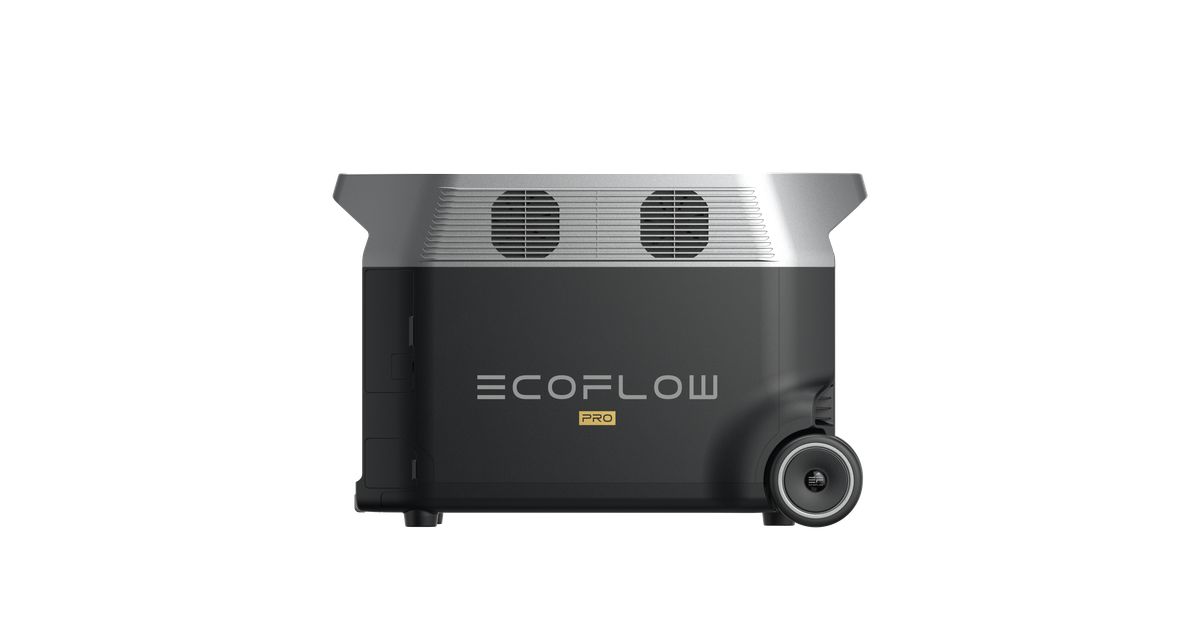
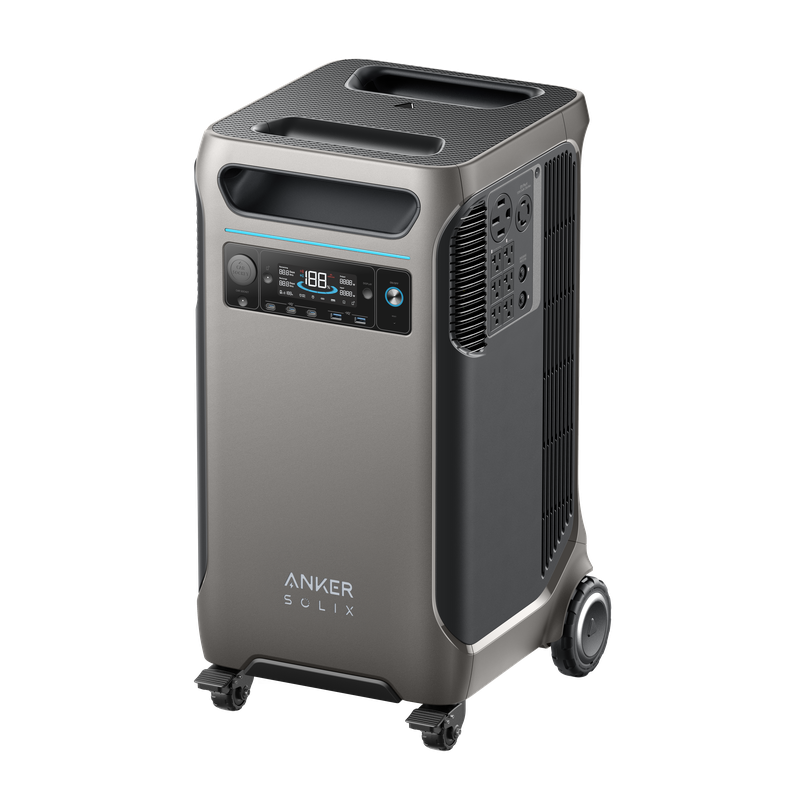
The facts, side by side.
Manufacturer specifications for the named models. On small screens, scroll the table sideways. A blank research field means the fact was not included here, not that the manufacturer does not publish it. Conditions and differently scoped specifications are kept separate.
| What matters | DELTA Pro [1] | SOLIX F3800 [2] |
|---|---|---|
| Battery capacity | 3,600 Wh nominal | 3,840 Wh nominal |
| Rated AC output | 3,600 W total; 120 V from one US station | Up to 6,000 W; 120/240 V US output |
| Weight | Approximately 99 lb / 45 kg | 132.3 lb / 60 kg |
| Battery chemistry | LFP | LFP |
| Solar input maximum | 1,600 W; 11–150 V, 15 A maximum | 2,400 W total; compatible array required |
| USB-C output | 2 × up to 100 W | 3 × up to 100 W |
Listed maximums are manufacturer claims under their stated conditions, not results from our own testing. Regional versions and bundles can differ. No live prices or stock claims are shown.
The appliance voltage comes before the battery size
A larger watt rating cannot make a 120 V outlet suitable for a 240 V appliance. F3800’s native output arrangement deserves attention if a specified 240 V load is central to the purchase. The original DELTA Pro requires additional compatible equipment and another station for its supported dual-voltage arrangement. That is a different system from the single base unit compared here.
Write a load schedule that records voltage, running watts, starting demand and which appliances overlap. Check the rating of the particular outlet as well as the station total. For a home-circuit connection, establish the compatible transfer equipment and installation plan before buying. A portable station’s socket count does not by itself make the station suitable for connection to an electrical panel.
Manufacturer references: DELTA Pro · SOLIX F3800
The output gap is much larger than the reserve gap
The nominal reserves are 3,600 Wh for DELTA Pro and 3,840 Wh for F3800, a difference of 240 Wh. F3800’s higher output ceiling therefore does not imply a similarly large increase in stored energy. A demanding load can consume either reserve quickly. Use capacity to consider energy needs and output ratings to determine which equipment can run together.
For a fridge, communications equipment and lights, estimate consumption over the planned outage interval instead of adding appliance labels as though every device runs continuously. Include charging opportunities and a margin for conversion losses. Avoid a precise runtime prediction from nominal capacity alone. If the load already fits within EcoFlow’s rating, decide whether F3800’s voltage capability has a real job before treating its larger watt number as a benefit.
Manufacturer references: DELTA Pro · SOLIX F3800
Plan a route for a 99 lb or 132.3 lb station
EcoFlow lists about 99 lb; Anker lists 132.3 lb. Wheels help along a suitable floor, but they do not eliminate stairs, loading into a car, or lifting over a threshold. Measure the storage location and route, including ventilation space at the operating position. A station that remains on one floor poses a different handling problem from one that travels for every trip.
Compare the complete package carefully. The Amazon F3800 destination linked here includes a 400 W bifacial solar panel; the specification table describes the station alone. That panel adds equipment to store and deploy, without changing battery capacity. Check its exact contents against any EcoFlow bundle. Choose F3800 for a defined voltage or output requirement; choose DELTA Pro when the single-station 120 V arrangement covers the load and the lower listed weight matters.
Manufacturer references: DELTA Pro · SOLIX F3800
A CLOSER LOOK AT OWNERSHIP
Beyond the specification sheet.
Additional model-specific document research checked October 20, 2026. The original comparison’s specification check date remains shown above.
Check the complete setup before ordering
For the original US DELTA Pro, map the output voltage required by each appliance before choosing accessories. Do not substitute the capabilities of DELTA Pro 3 or Ultra. If household circuits are involved, have the installer specify the compatible integration equipment and installation scope rather than treating the base station as the whole project.
The original US F3800 has a consequential operating restriction: Anker’s FAQ says AC recharging allows use of its 120 V UPS outlets, not its 240 V outlet. Draw the charging and appliance sequence explicitly. Do not transfer F3800 Plus generator-bypass capabilities to this original model.
Sources: DELTA Pro — manufacturer model information; no independent performance test (opens in a new tab) · EcoFlow US warranty — eligibility and service scope, not universal damage coverage (opens in a new tab) · SOLIX F3800 — manufacturer model information; no independent performance test (opens in a new tab)
Price the equipment you will actually use
Compare a complete DELTA Pro installation quote with a portable-only quote. They may include very different cables, extra batteries, panels, and professional work. Confirm whether the intended voltage configuration needs additional equipment. Include a route for moving the unit; wheeling it across a floor does not solve lifting it over stairs.
Price F3800 expansion batteries, the approved home connection equipment, delivery, and any installer work separately from the station. Identify the circuit and connection hardware before comparing complete costs. For portable use, measure the storage doorway and loading route, and decide who will move the unit when assistance is unavailable.
Sources: DELTA Pro — manufacturer model information; no independent performance test (opens in a new tab) · EcoFlow US warranty — eligibility and service scope, not universal damage coverage (opens in a new tab) · SOLIX F3800 — manufacturer model information; no independent performance test (opens in a new tab)
Plan care, parts, and the service route
For a legacy DELTA Pro listing, confirm the model label, seller eligibility, included cables, and service availability before payment. Ask EcoFlow which current warranty terms apply and how a heavy unit would be collected. A discount does not establish whether the particular listing is new, refurbished, or supplied through an authorized seller.
Use the US F3800 documentation for the delivered hardware. A generic search may surface another region’s manual with different electrical specifications. Ask Anker for the applicable warranty, collection procedure, battery service options, and requirements for an installed configuration. We have not verified an individual household installation or quoted its service costs.
Sources: DELTA Pro — manufacturer model information; no independent performance test (opens in a new tab) · EcoFlow US warranty — eligibility and service scope, not universal damage coverage (opens in a new tab) · SOLIX F3800 — manufacturer model information; no independent performance test (opens in a new tab)
What rules each option out—and when to keep what you own
Start with the required voltage and the sequence of charging and operation. Anker’s original F3800 FAQ rules out using its 240 V outlet while AC recharging. That can disqualify it for a particular workflow despite its dual-voltage specification. Obtain a complete approved DELTA Pro configuration before assuming the original base unit solves the same electrical task.
Keep existing backup equipment if it already supplies the essential circuits and the maintenance route is sound. Before buying either heavy station, compare a professionally specified installed solution for regular household service and a smaller portable unit for occasional individual loads. A high output rating does not remove the need to design the installation or moving route.
Sources: DELTA Pro — manufacturer model information; no independent performance test (opens in a new tab) · EcoFlow US warranty — eligibility and service scope, not universal damage coverage (opens in a new tab) · SOLIX F3800 — manufacturer model information; no independent performance test (opens in a new tab)
THE REST OF THE BUYING DECISION
Think beyond the upgrade.
The best portable power station is the one that powers your essential equipment for the time you need, can be recharged where you use it, and is manageable to carry. Start with an equipment list, not a promotional wattage. This guide explains the decisions behind a useful shortlist; manufacturer specifications are evidence of stated capabilities, not our own runtime tests.
The portable power field guide covers the broader ownership questions, with source-specific examples. It complements this exact-model comparison; its examples do not establish features or policies for every model here.
MAKE IT YOUR DECISION
Your before-you-buy checklist.
Use this as a final check, alongside the model-specific evidence above.
Check off the questions you have resolved. Nothing is sent to a server.
Before you place the order.
- Match the full model name and generation. A similarly named bundle may have different accessories.
- Confirm the total price, seller, warranty eligibility, delivery estimate, and return terms at checkout.
- Account for any accessories or compatible equipment your setup needs. An upgrade only has value if you will use it.
Your product questions, answered.
Does one original DELTA Pro supply 240 V?
The single US station here supplies 120 V. EcoFlow’s compatible dual-voltage system requires additional hardware and another station.
Is the F3800 shopping link station only?
The verified Amazon destination here is an original F3800 with a 400 W bifacial panel. Check the selected bundle and contents before checkout.
Can F3800 run 240 V equipment while AC charging?
Anker’s US FAQ for the original F3800 says no; only its 120 V UPS outlets operate in that situation. F3800 Plus documentation should not be substituted.
Sources: DELTA Pro — manufacturer model information; no independent performance test (opens in a new tab) · EcoFlow US warranty — eligibility and service scope, not universal damage coverage (opens in a new tab) · SOLIX F3800 — manufacturer model information; no independent performance test (opens in a new tab)
Is the base-unit price the installation cost?
No. Specify approved connection hardware, cables, expansion, delivery, and any professional installation. Compare the same completed job on both sides rather than a bare station against an installed package.
Sources: DELTA Pro — manufacturer model information; no independent performance test (opens in a new tab) · EcoFlow US warranty — eligibility and service scope, not universal damage coverage (opens in a new tab) · SOLIX F3800 — manufacturer model information; no independent performance test (opens in a new tab)
What if I only need a refrigerator and router?
Measure those loads and the required duration first. A smaller verified system may be easier to move and store. Neither large station should be selected solely for headline output.
Sources: DELTA Pro — manufacturer model information; no independent performance test (opens in a new tab) · EcoFlow US warranty — eligibility and service scope, not universal damage coverage (opens in a new tab) · SOLIX F3800 — manufacturer model information; no independent performance test (opens in a new tab)
What service question matters for these heavy units?
Ask who arranges collection, what packaging is required, which components must be returned, and who pays freight. Get the answer for your seller and region before purchase.
Sources: DELTA Pro — manufacturer model information; no independent performance test (opens in a new tab) · EcoFlow US warranty — eligibility and service scope, not universal damage coverage (opens in a new tab) · SOLIX F3800 — manufacturer model information; no independent performance test (opens in a new tab)
Sources & limitations.
Original comparison research: October 18, 2026. Individual product-source checks and ownership additions carry their own dates. These links identify the manufacturer evidence used for the specifications. Recommendations and practical implications are our editorial judgments. We have not measured performance, reliability, comfort, or long-term ownership for this comparison.
- EcoFlow DELTA Pro (original US model) — manufacturer specifications (opens in a new tab)
EcoFlow original DELTA Pro user manual (opens in a new tab)
Checked October 18, 2026. - Anker SOLIX F3800 (original US model) — manufacturer specifications (opens in a new tab)
Anker F3800 user guide (opens in a new tab)
Checked October 18, 2026.
Confirm current specifications for your region and exact bundle. Read our research and correction approach.