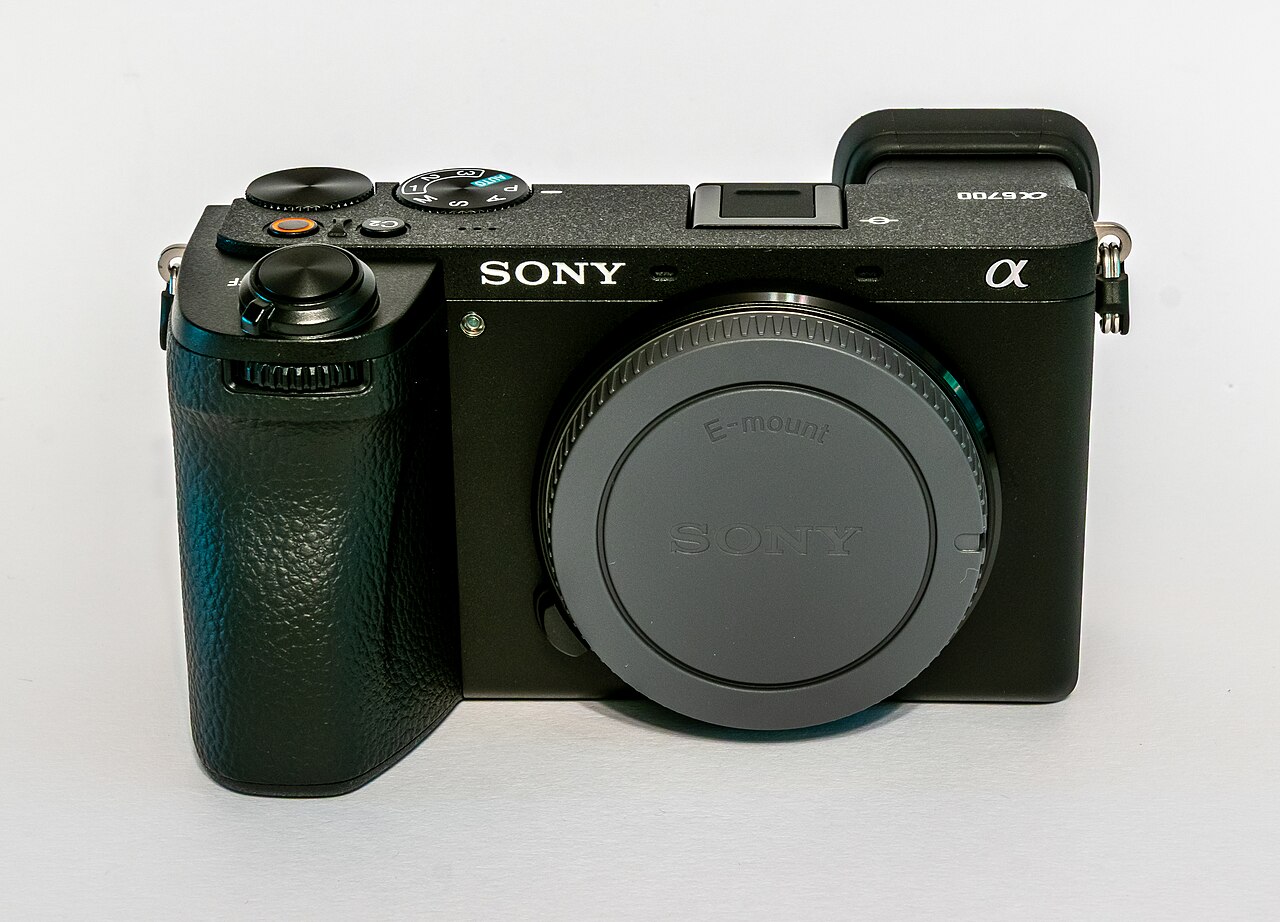
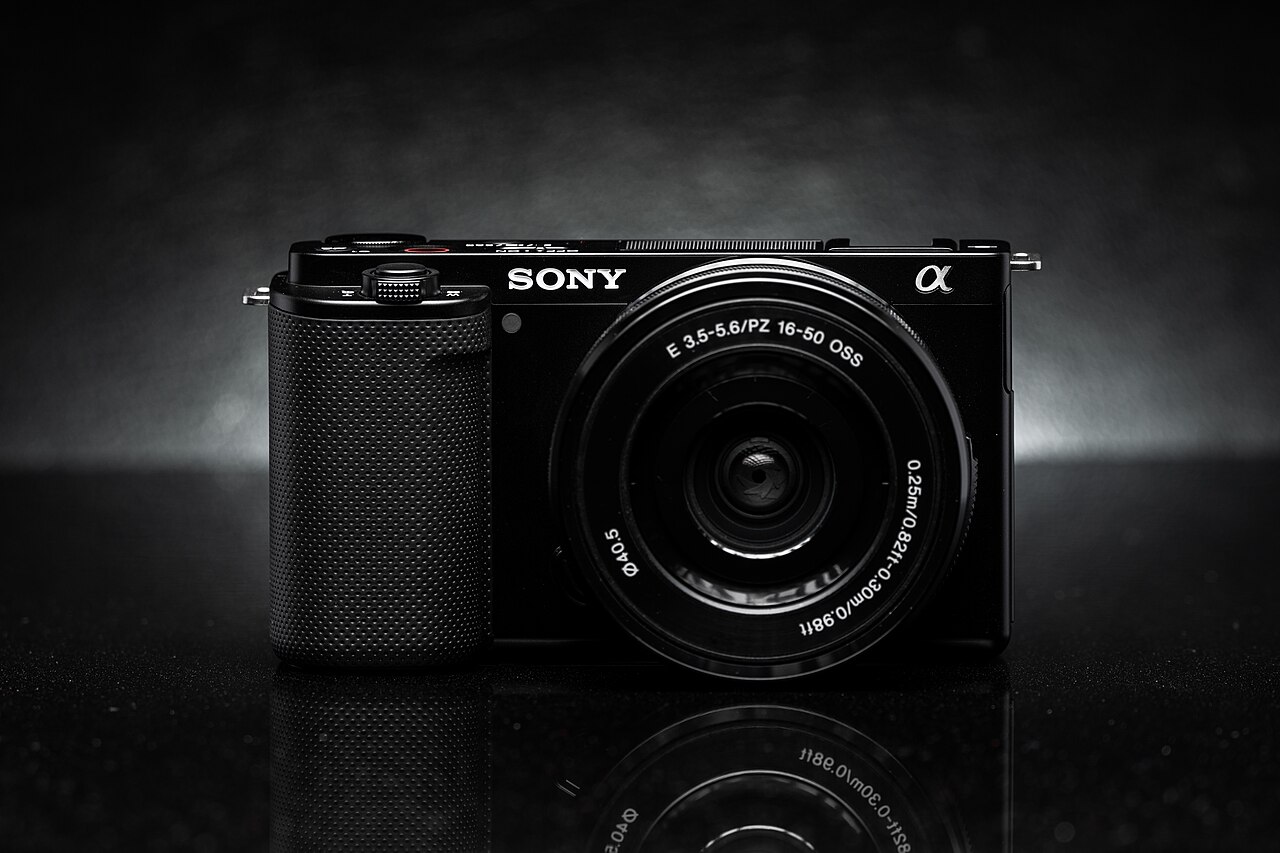
THE DIFFERENCES THAT MATTER
Canon EOS R50 vs Sony a6400: screen layout and lens system first
Two 24.2 MP APS-C cameras with different lens mounts, body shapes, and screen movements. Build the kit around your subjects.
Researched from manufacturer sources. These products have not been hands-on tested for this article.
START HERE
Which lens system and screen layout will work with the way you shoot?
The shared 24.2-megapixel headline makes this look like a body-specification tie, but the ownership decision reaches further. Canon RF and Sony E are different lens systems, and their screen movements suit different rigs. I would start with the lenses and self-filming arrangement you need before comparing maximum burst numbers.
Canon EOS R50 (black body)
A good fit if: A shortlist option for a compact Canon kit or self-filming with a side-hinged screen.
The tradeoff: Its maximum electronic burst figure is not a mechanical-shutter performance claim.
Sony α6400 (ILCE-6400)
A good fit if: A shortlist option when Sony E-mount lenses or the low-profile body shape suit your kit.
The tradeoff: The upward-tilting screen needs checking with your microphone or other shoe accessories.
As an Amazon Associate I earn from qualifying purchases. How shopping links work.
EOS R50
View this model on Amazon : Canon EOS R50 (black body) (opens in a new tab)Check the seller, exact variant, price and included accessories.Sony a6400
View this model on Amazon : Sony α6400 (ILCE-6400) (opens in a new tab)Check the seller, exact variant, price and included accessories.See the product photos and comparison illustration
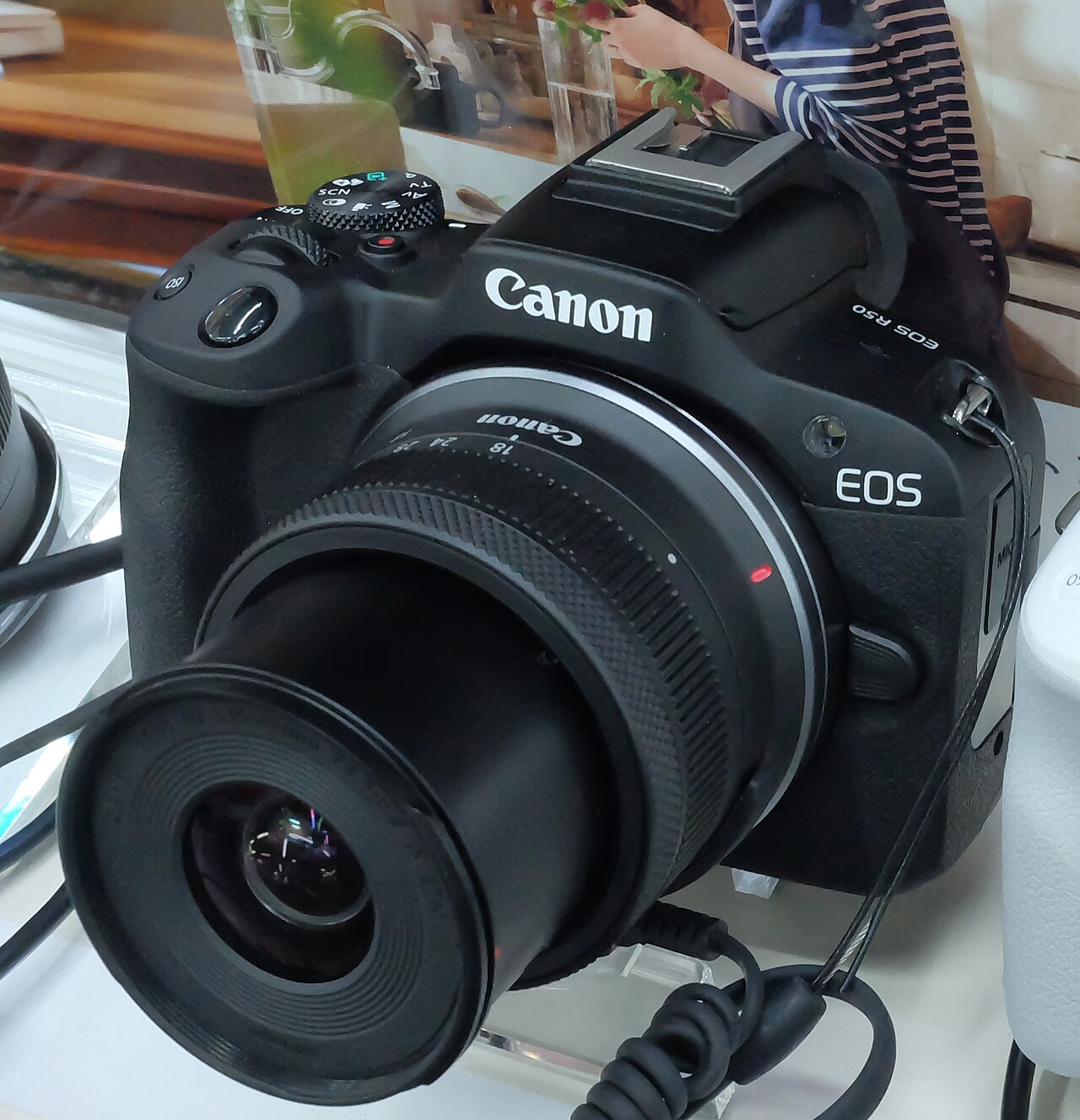
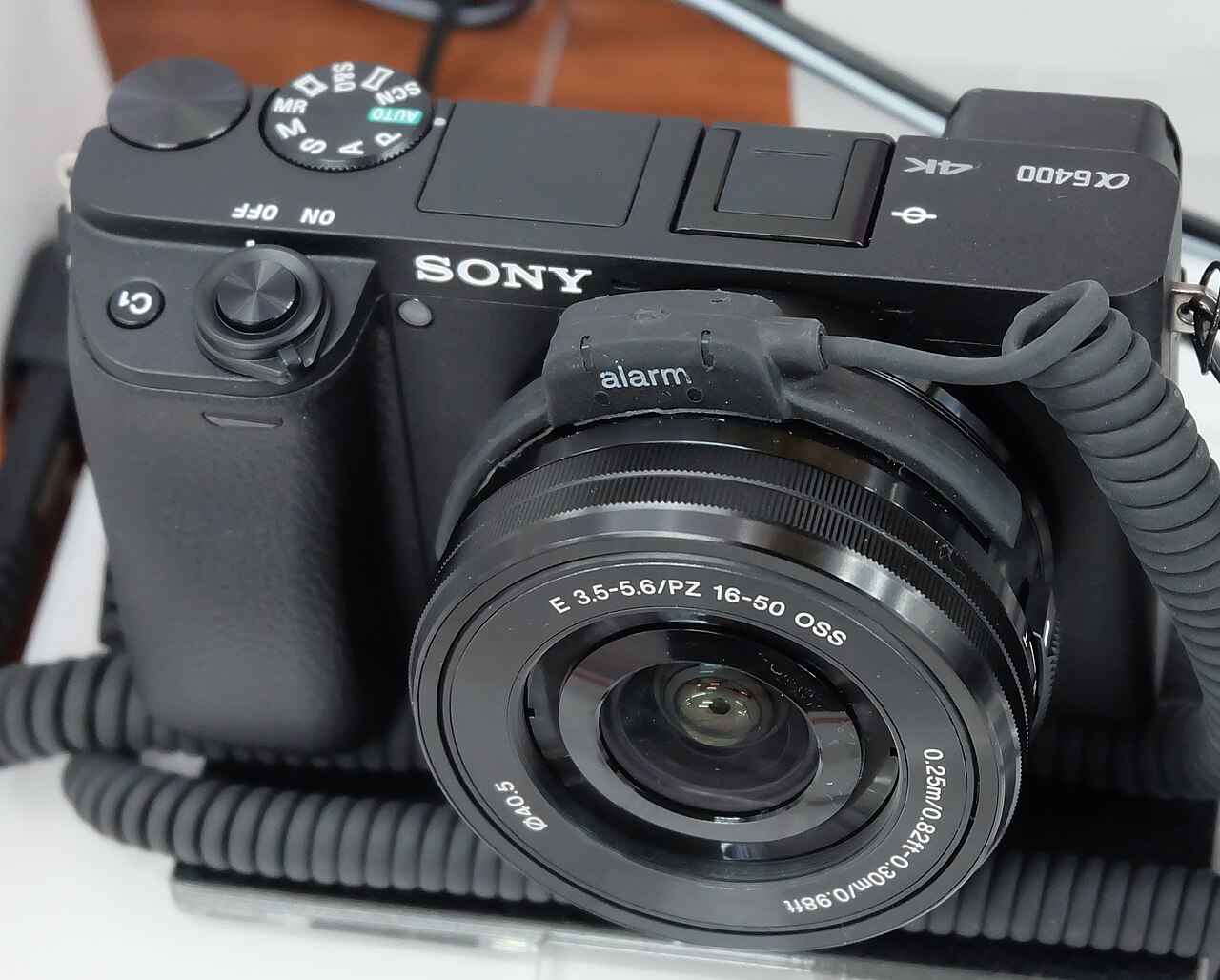
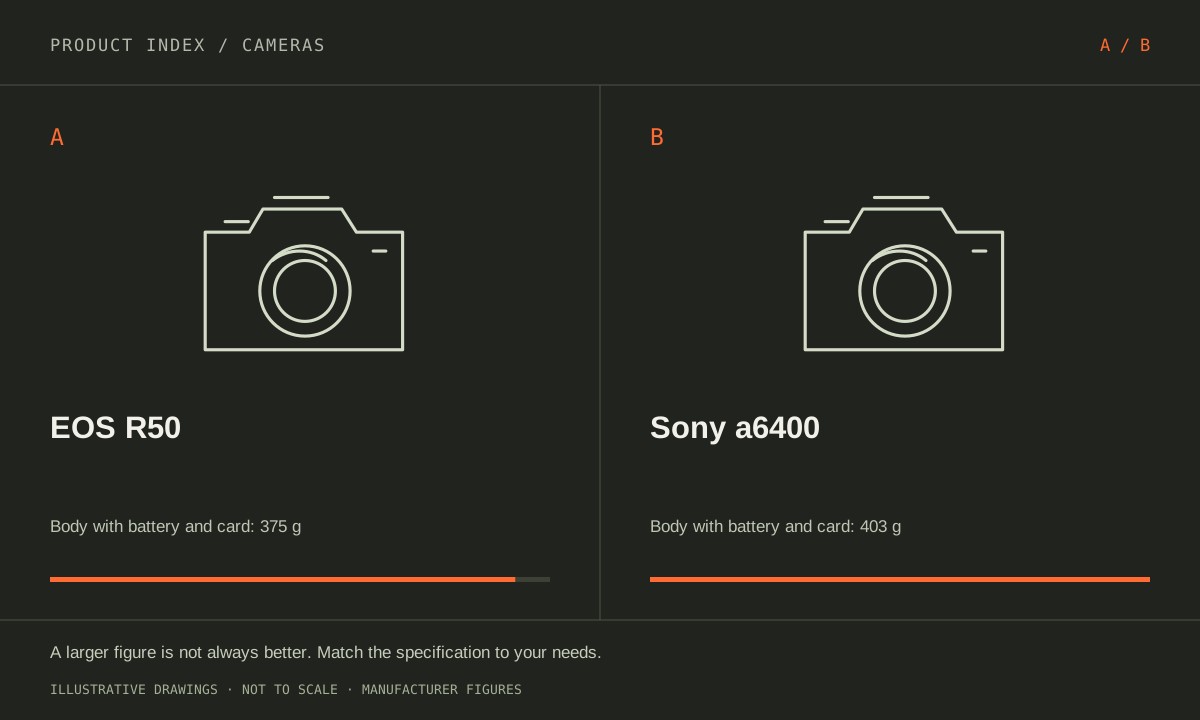
The facts, side by side.
Manufacturer specifications for the named models. On small screens, scroll the table sideways. A blank research field means the fact was not included here, not that the manufacturer does not publish it. Conditions and differently scoped specifications are kept separate.
| What matters | EOS R50 [1] | Sony a6400 [2] |
|---|---|---|
| Effective resolution | Approximately 24.2 megapixels | Approximately 24.2 megapixels |
| Sensor format | APS-C | APS-C |
| Lens mount | Canon RF; native RF and RF-S lenses | Sony E-mount |
| Continuous stills claim | Up to 12 fps electronic first-curtain; 15 fps electronic | Approximately 11 fps maximum in Hi+ |
| Screen | 3-inch vari-angle touchscreen | 3-inch touchscreen; tilts up about 180° and down 74° |
| Weight with battery/card | Approximately 375 g (black body) | Approximately 403 g |
| Dimensions (body) | 116.3 × 85.5 × 68.8 mm | 120 × 66.9 × 59.7 mm |
Listed maximums are manufacturer claims under their stated conditions, not results from our own testing. Regional versions and bundles can differ. No live prices or stock claims are shown.
Choose a lens path you can explain
Both cameras list an APS-C sensor and approximately 24.2 effective megapixels. Canon R50 uses RF mount; Sony a6400 uses E-mount. That means a lens kit selected for one is not automatically a native kit for the other. Existing lenses, planned focal lengths, and the complete purchase deserve attention before a body name wins the comparison.
Write down what you want to photograph, how far away it usually is, and the light available. Then identify a small realistic lens set for each system, checking the actual lenses and compatibility rather than assuming a kit zoom answers every need. If you already own a suitable lens, include the consequences of keeping or changing systems. If this is a first interchangeable-lens camera, include the cost and carrying size of the next lens you are likely to need. The headline resolution alone cannot tell you which system better supports that plan.
Manufacturer references: EOS R50 · Sony a6400
The screen movement can matter more than a small weight gap
R50 has a vari-angle touchscreen, while a6400’s display tilts upward by about 180 degrees. For filming yourself, think about the whole rig: microphone, cable, support, and the direction in which the screen must remain visible. An upward screen and a side-hinged screen create different clearance questions once accessories are attached.
Sketch the arrangement or try it with your intended equipment. Check whether a microphone obscures your view, whether cables occupy the moving-screen space, and whether the camera remains usable in the orientation you want. The listed ready-to-shoot body weights are about 375 g for black R50 and 403 g for a6400. That difference is smaller than many changes you could make through lens or accessory choice, so evaluate the whole bag. A screen that works with your rig is more useful than a slightly lighter body whose display you cannot see.
Manufacturer references: EOS R50 · Sony a6400
Maximum burst rates do not settle autofocus or image quality
R50 lists up to 12 fps with electronic first-curtain and 15 fps electronically; a6400 lists approximately 11 fps in Hi+. Those are mode-specific manufacturer limits. They are useful for understanding available shooting choices, but they do not constitute a shared test of tracking success, image quality, or the number of usable photographs in difficult light.
An action-oriented buyer should read the mode limitations and compare the lens they can actually use at the subject distance. A family or travel buyer might place more value on carrying the camera regularly, finding the controls, and transferring images comfortably. Hold each with a representative lens before committing if possible. I would shortlist R50 for a Canon lens plan or a rig that benefits from the vari-angle screen; a6400 for an E-mount plan or its low-profile body arrangement. Make the choice through the kit you will build, not a claim that one megapixel or burst figure proves the better camera.
Manufacturer references: EOS R50 · Sony a6400
A CLOSER LOOK AT OWNERSHIP
Beyond the specification sheet.
Additional model-specific document research checked October 20, 2026. The original comparison’s specification check date remains shown above.
Check the complete setup before ordering
R50 uses RF and RF-S lenses directly. Canon also supports EF and EF-S lenses through its optional Mount Adapter EF-EOS R, but excludes EF-M lenses. An EOS M owner therefore needs a replacement lens plan; the EF-EOS R adapter does not rescue that collection. Include the adapter for an existing EF/EF-S kit.
For a6400, assemble the actual E-mount lens and any microphone before judging the screen arrangement. Test the intended viewing position with those accessories fitted. Confirm the exact card and video settings for the job, and avoid assuming that every newer Sony feature exists on this earlier body.
Sources: EOS R50 — manufacturer model information; no independent performance test (opens in a new tab) · Canon R50 US support — exact lens, maintenance, and warranty information (opens in a new tab) · Canon R50 manual — recording limits and digital stabilization crop (opens in a new tab) · Canon maintenance services — available service types, not a repair-price promise (opens in a new tab) · Canon R50 manual — EF/EF-S adapter support and EF-M exclusion (opens in a new tab) · Sony a6400 — manufacturer model information; no independent performance test (opens in a new tab) · Sony a6400 guide — model-specific battery care (opens in a new tab)
Price the equipment you will actually use
Price the R50 body with a useful lens, suitable card, charging equipment, and the bag or support needed for your subject. If you already own an appropriate lens, avoid paying for a redundant kit. If you own none, a body-only discount is not the complete cost of taking your first photograph.
Budget a6400 with a suitable lens, approved battery, card, and any microphone bracket or support required by your setup. Include the cost of adapting or replacing equipment from another mount. A low body price is useful only if the complete kit remains practical and solves your real capture problem.
Sources: EOS R50 — manufacturer model information; no independent performance test (opens in a new tab) · Canon R50 US support — exact lens, maintenance, and warranty information (opens in a new tab) · Canon R50 manual — recording limits and digital stabilization crop (opens in a new tab) · Canon maintenance services — available service types, not a repair-price promise (opens in a new tab) · Canon R50 manual — EF/EF-S adapter support and EF-M exclusion (opens in a new tab) · Sony a6400 — manufacturer model information; no independent performance test (opens in a new tab) · Sony a6400 guide — model-specific battery care (opens in a new tab)
Plan care, parts, and the service route
Canon’s R50 support page identifies its maintenance features and service information. Get the model-specific procedure before addressing sensor dust, and check purchase-region eligibility for repair. Ask the seller whether the lens and body in a kit have separate coverage. This guide does not establish damage coverage or repair turnaround.
Sony’s a6400 battery guidance calls for the specified battery type and treats substantial runtime loss as a replacement question. Ask about current genuine-battery availability and regional body service. On used stock, check the ports and battery compartment as well as the shutter count; one number does not establish overall condition.
Sources: EOS R50 — manufacturer model information; no independent performance test (opens in a new tab) · Canon R50 US support — exact lens, maintenance, and warranty information (opens in a new tab) · Canon R50 manual — recording limits and digital stabilization crop (opens in a new tab) · Canon maintenance services — available service types, not a repair-price promise (opens in a new tab) · Canon R50 manual — EF/EF-S adapter support and EF-M exclusion (opens in a new tab) · Sony a6400 — manufacturer model information; no independent performance test (opens in a new tab) · Sony a6400 guide — model-specific battery care (opens in a new tab)
What rules each option out—and when to keep what you own
Start with the lens that frames the subject from your actual shooting distance. Rule out a body-only bargain when the necessary lens, audio connection, or support equipment pushes the working system beyond your budget. R50 and a6400 use different lens mounts; an existing lens collection needs a model-by-model compatibility check before it becomes a reason to choose either.
Keep an existing camera if the missed pictures come from shutter settings, unsuitable focal length, or poor lighting. For a new system, compare a complete Canon and Sony basket with a lens, card, spare power, and intended microphone. Practice the controls and screen position before relying on a specification difference to improve everyday photography.
Sources: EOS R50 — manufacturer model information; no independent performance test (opens in a new tab) · Canon R50 US support — exact lens, maintenance, and warranty information (opens in a new tab) · Canon R50 manual — recording limits and digital stabilization crop (opens in a new tab) · Canon maintenance services — available service types, not a repair-price promise (opens in a new tab) · Canon R50 manual — EF/EF-S adapter support and EF-M exclusion (opens in a new tab) · Sony a6400 — manufacturer model information; no independent performance test (opens in a new tab) · Sony a6400 guide — model-specific battery care (opens in a new tab)
THE REST OF THE BUYING DECISION
Think beyond the upgrade.
A camera purchase includes a lens system, a way to capture sound, a storage workflow, and equipment you must be willing to carry. Begin with the shots your current kit cannot reliably deliver. This guide uses official Canon documentation for concrete examples while keeping the decision process applicable across brands. Specifications do not substitute for our own image-quality, autofocus, or endurance testing, which we do not claim here.
The cameras field guide covers the broader ownership questions, with source-specific examples. It complements this exact-model comparison; its examples do not establish features or policies for every model here.
MAKE IT YOUR DECISION
Your before-you-buy checklist.
Use this as a final check, alongside the model-specific evidence above.
Check off the questions you have resolved. Nothing is sent to a server.
Before you place the order.
- Match the full model name and generation. A similarly named bundle may have different accessories.
- Confirm the total price, seller, warranty eligibility, delivery estimate, and return terms at checkout.
- Account for any accessories or compatible equipment your setup needs. An upgrade only has value if you will use it.
Your product questions, answered.
Can these cameras share native lenses?
R50 uses Canon RF mount and a6400 uses Sony E-mount. Do not assume a lens bought for one mounts natively on the other.
Is the a6400 screen suitable for self-filming?
It tilts upward about 180 degrees, but check visibility with your exact microphone, shoe accessories, cables, and support.
Which older Canon lenses can I move to R50?
EF and EF-S lenses use the optional Mount Adapter EF-EOS R. EF-M lenses are excluded. Sony a6400 is a different E-mount system, so the Canon adapter is not a shared route for both bodies.
Sources: EOS R50 — manufacturer model information; no independent performance test (opens in a new tab) · Canon R50 US support — exact lens, maintenance, and warranty information (opens in a new tab) · Canon R50 manual — recording limits and digital stabilization crop (opens in a new tab) · Canon maintenance services — available service types, not a repair-price promise (opens in a new tab) · Canon R50 manual — EF/EF-S adapter support and EF-M exclusion (opens in a new tab) · Sony a6400 — manufacturer model information; no independent performance test (opens in a new tab) · Sony a6400 guide — model-specific battery care (opens in a new tab)
Is a body-only listing the cheapest complete choice?
Only after adding a suitable lens and necessary accessories. Compare complete baskets at the same intended field of view, rather than treating a missing lens as a saving.
Sources: EOS R50 — manufacturer model information; no independent performance test (opens in a new tab) · Canon R50 US support — exact lens, maintenance, and warranty information (opens in a new tab) · Canon R50 manual — recording limits and digital stabilization crop (opens in a new tab) · Canon maintenance services — available service types, not a repair-price promise (opens in a new tab) · Canon R50 manual — EF/EF-S adapter support and EF-M exclusion (opens in a new tab) · Sony a6400 — manufacturer model information; no independent performance test (opens in a new tab) · Sony a6400 guide — model-specific battery care (opens in a new tab)
What should I test for family video?
Try framing, focus, audio, and handheld movement in the intended recording mode. Check card and power requirements and rehearse a full clip rather than assuming brief demonstrations represent longer recording.
Sources: EOS R50 — manufacturer model information; no independent performance test (opens in a new tab) · Canon R50 US support — exact lens, maintenance, and warranty information (opens in a new tab) · Canon R50 manual — recording limits and digital stabilization crop (opens in a new tab) · Canon maintenance services — available service types, not a repair-price promise (opens in a new tab) · Canon R50 manual — EF/EF-S adapter support and EF-M exclusion (opens in a new tab) · Sony a6400 — manufacturer model information; no independent performance test (opens in a new tab) · Sony a6400 guide — model-specific battery care (opens in a new tab)
What can improve results without a new body?
Check exposure settings, focus selection, lighting, and whether the current lens suits the distance. Identify the failed task before deciding that either body would fix it.
Sources: EOS R50 — manufacturer model information; no independent performance test (opens in a new tab) · Canon R50 US support — exact lens, maintenance, and warranty information (opens in a new tab) · Canon R50 manual — recording limits and digital stabilization crop (opens in a new tab) · Canon maintenance services — available service types, not a repair-price promise (opens in a new tab) · Canon R50 manual — EF/EF-S adapter support and EF-M exclusion (opens in a new tab) · Sony a6400 — manufacturer model information; no independent performance test (opens in a new tab) · Sony a6400 guide — model-specific battery care (opens in a new tab)
Sources & limitations.
Original comparison research: October 18, 2026. Individual product-source checks and ownership additions carry their own dates. These links identify the manufacturer evidence used for the specifications. Recommendations and practical implications are our editorial judgments. We have not measured performance, reliability, comfort, or long-term ownership for this comparison.
- Canon EOS R50 (black body) — manufacturer specifications (opens in a new tab)
Checked October 18, 2026. - Sony α6400 (ILCE-6400) — manufacturer specifications (opens in a new tab)
Checked October 18, 2026.
Confirm current specifications for your region and exact bundle. Read our research and correction approach.